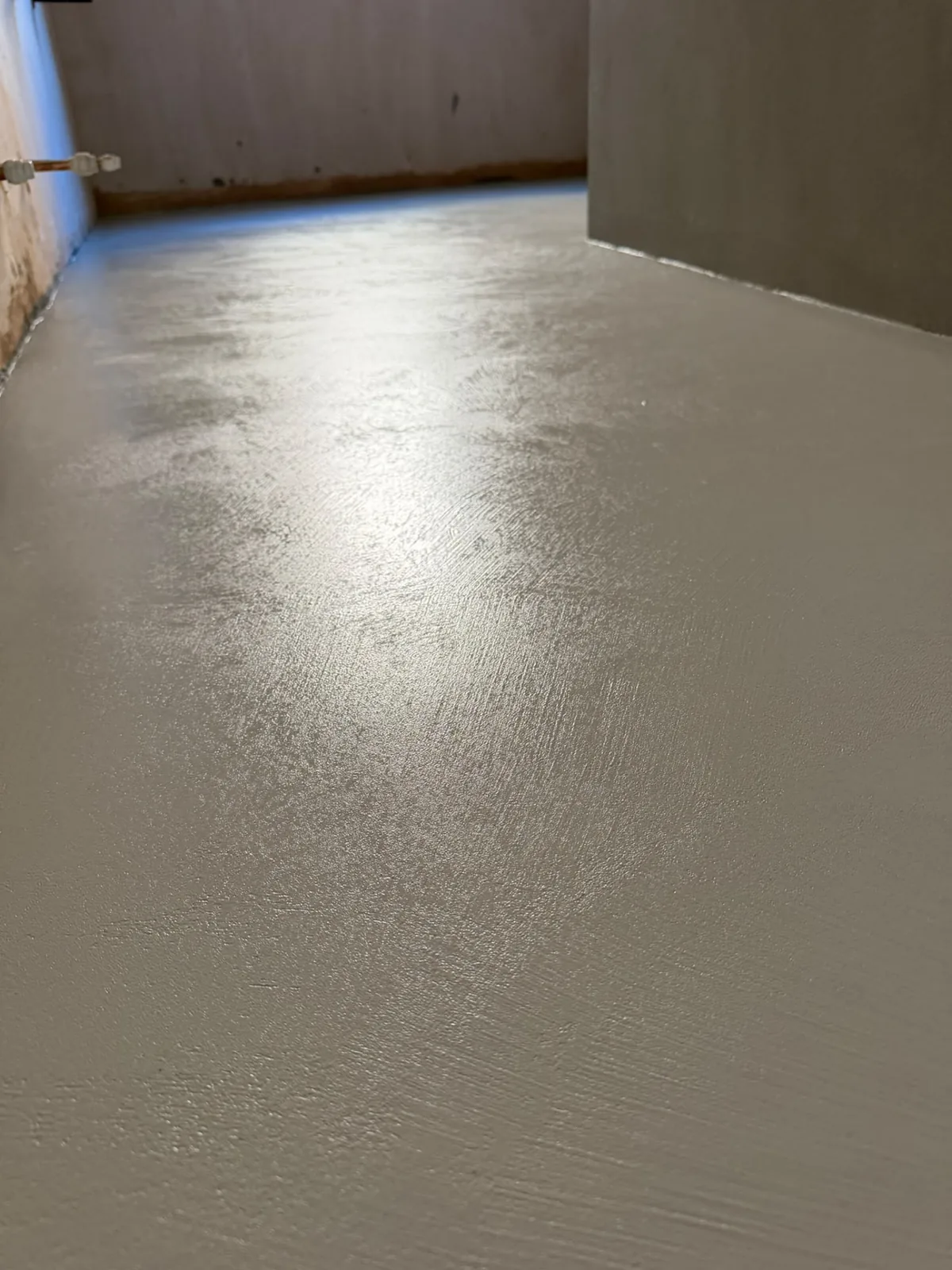
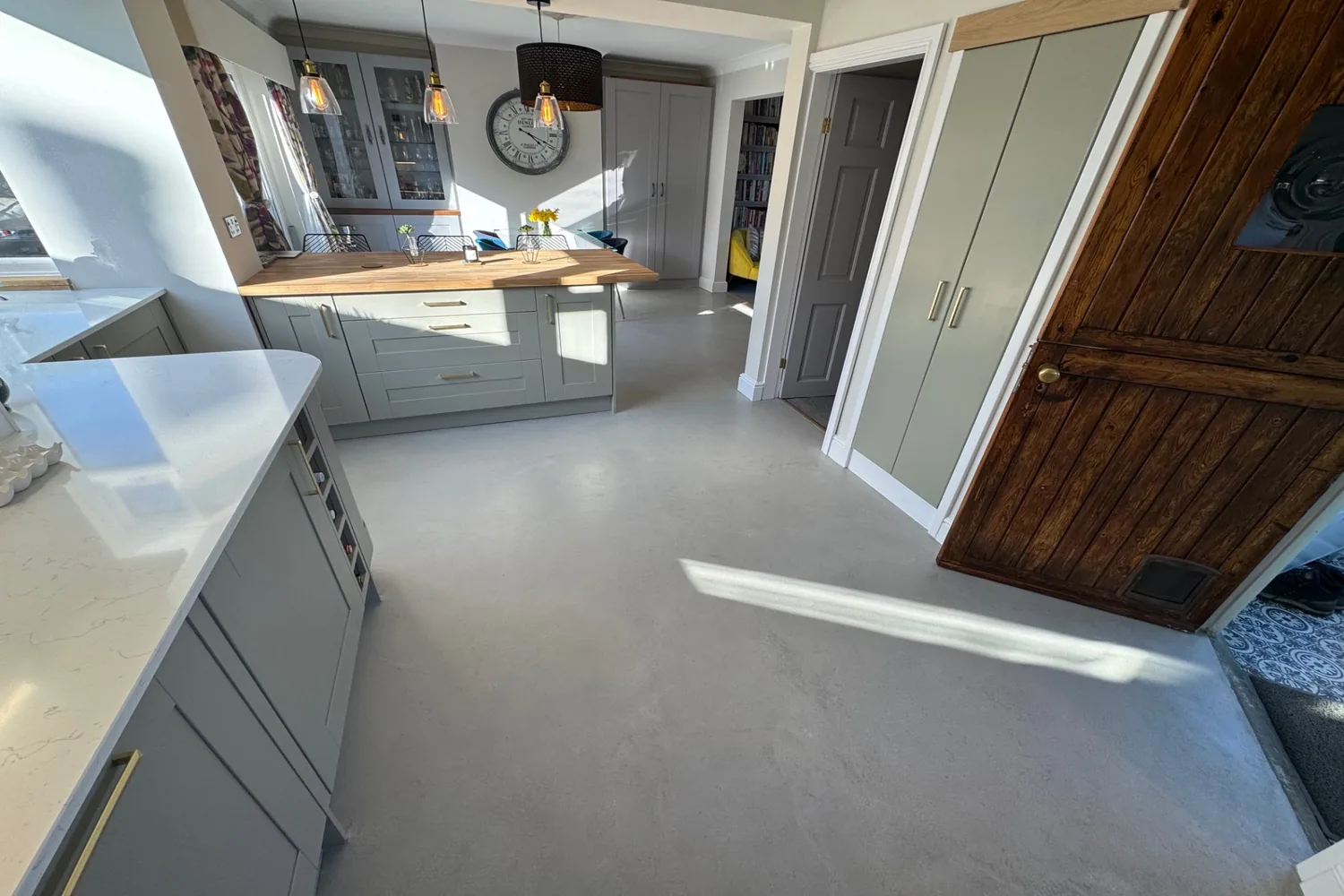
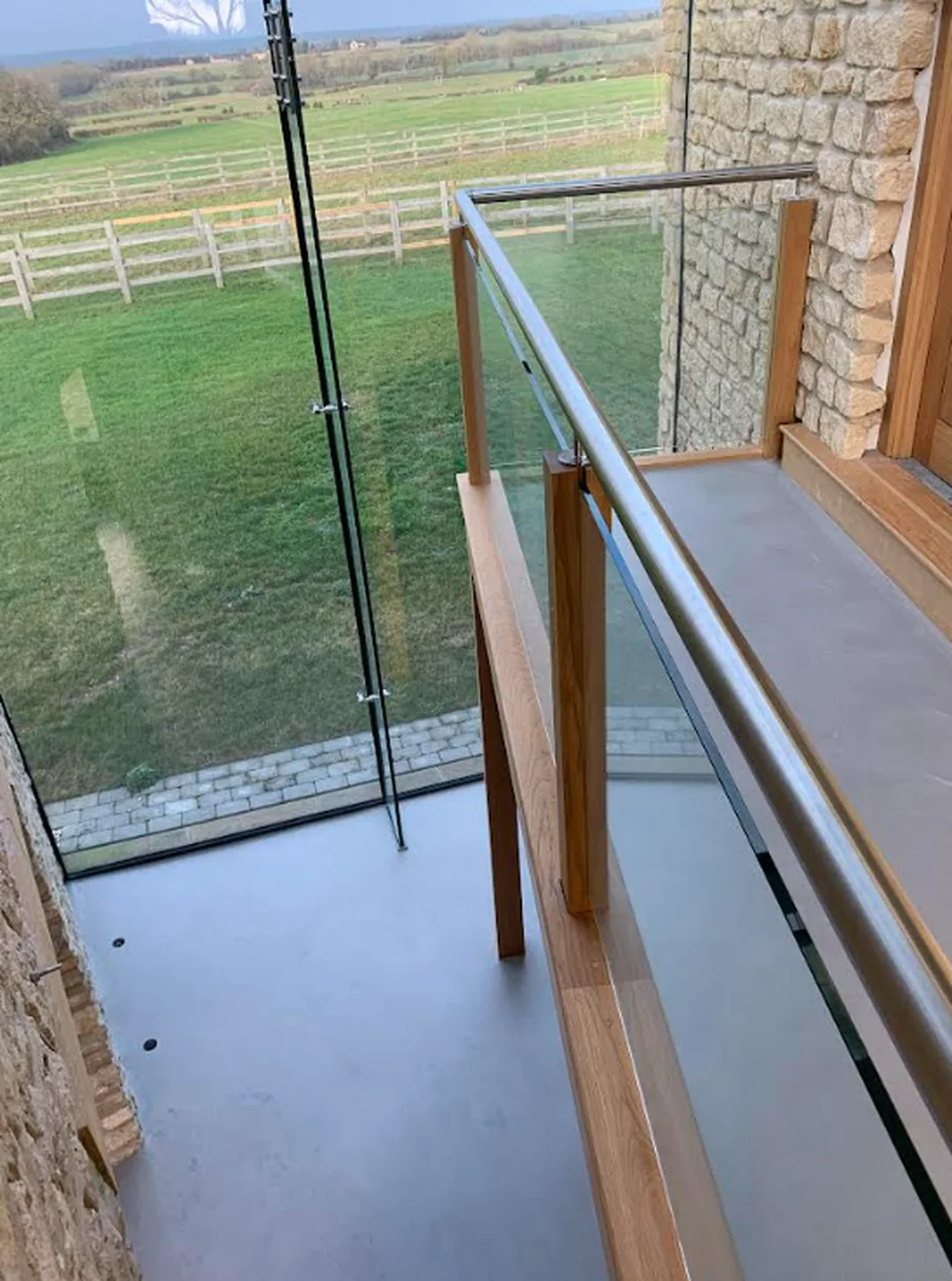
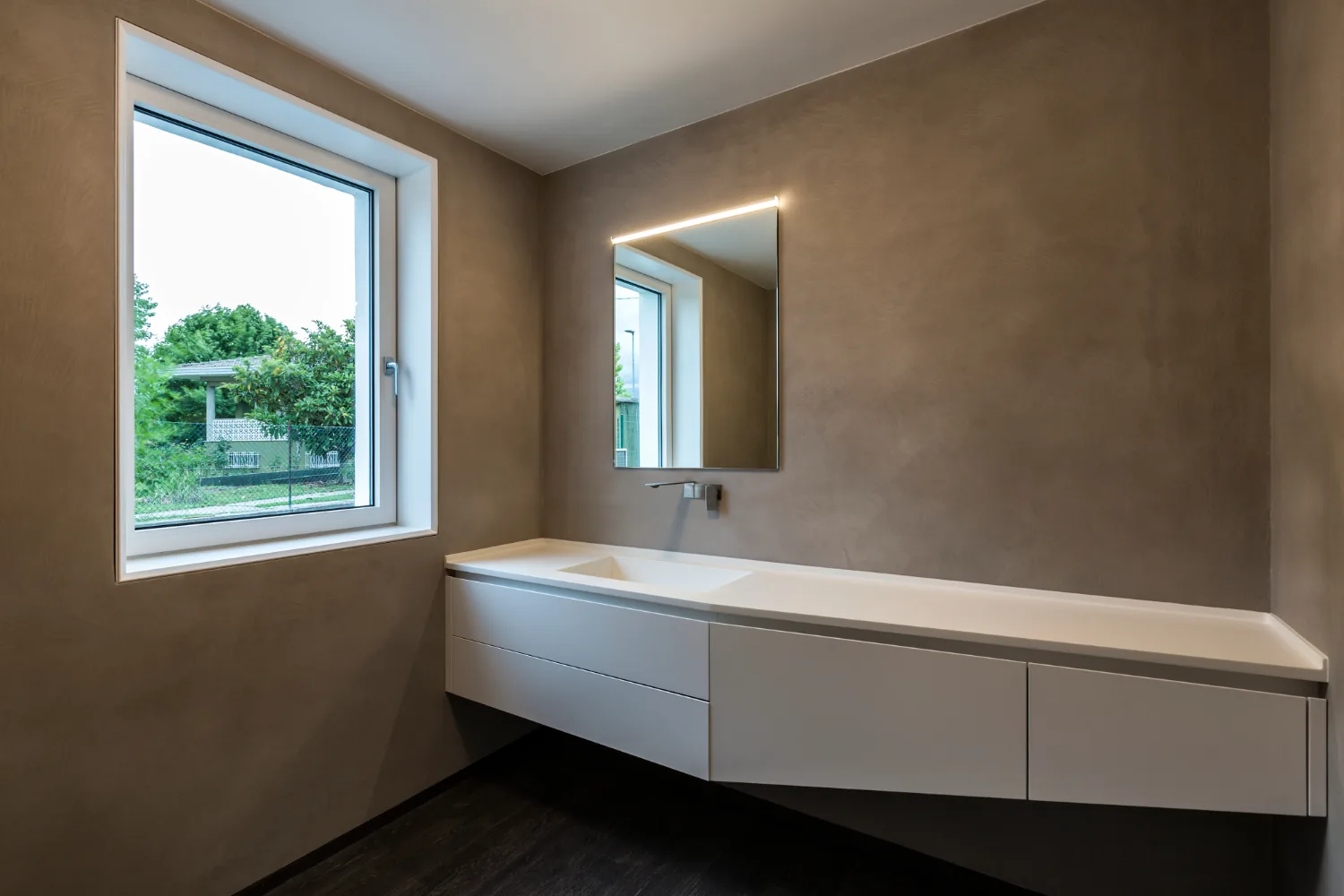
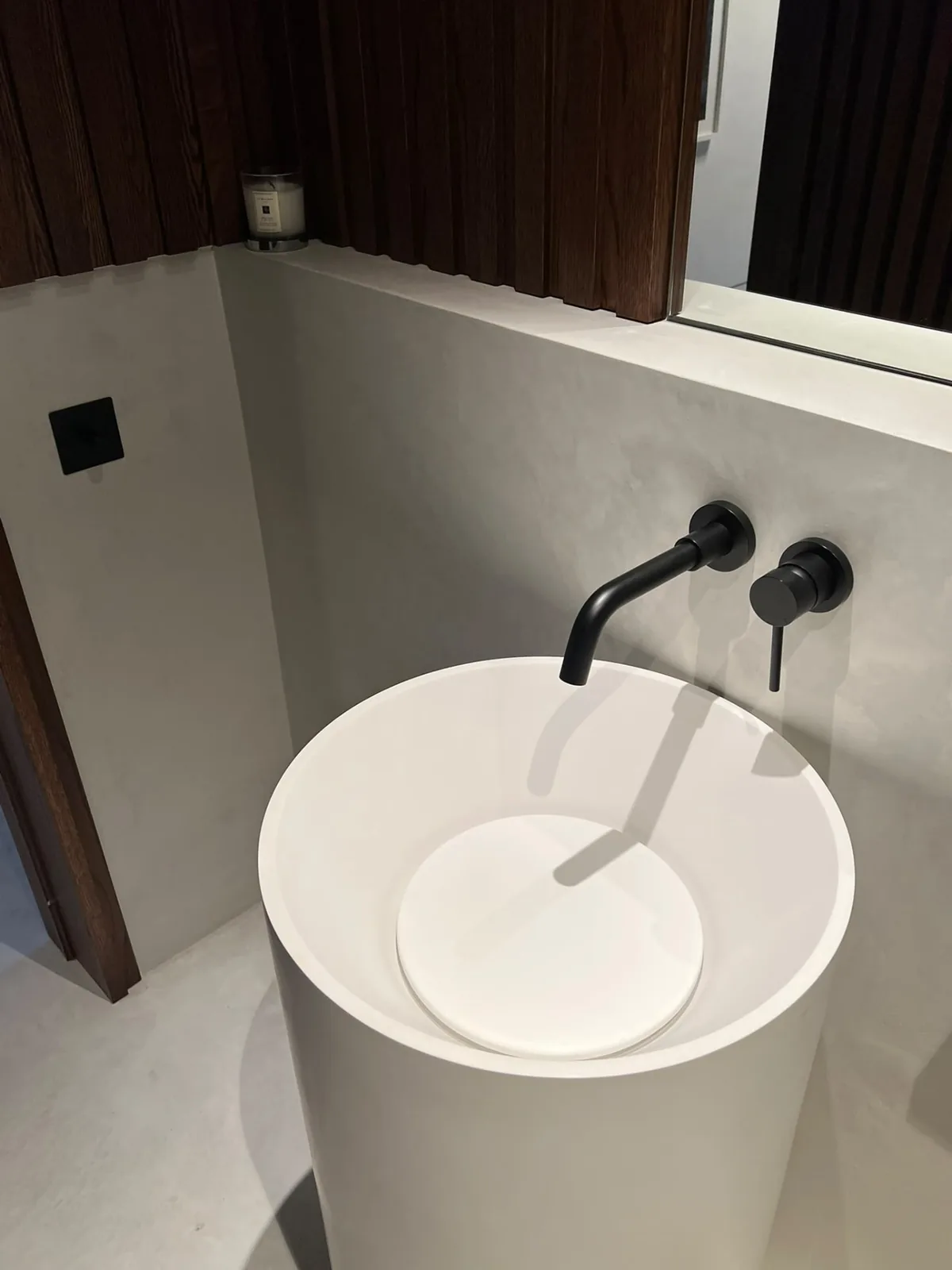
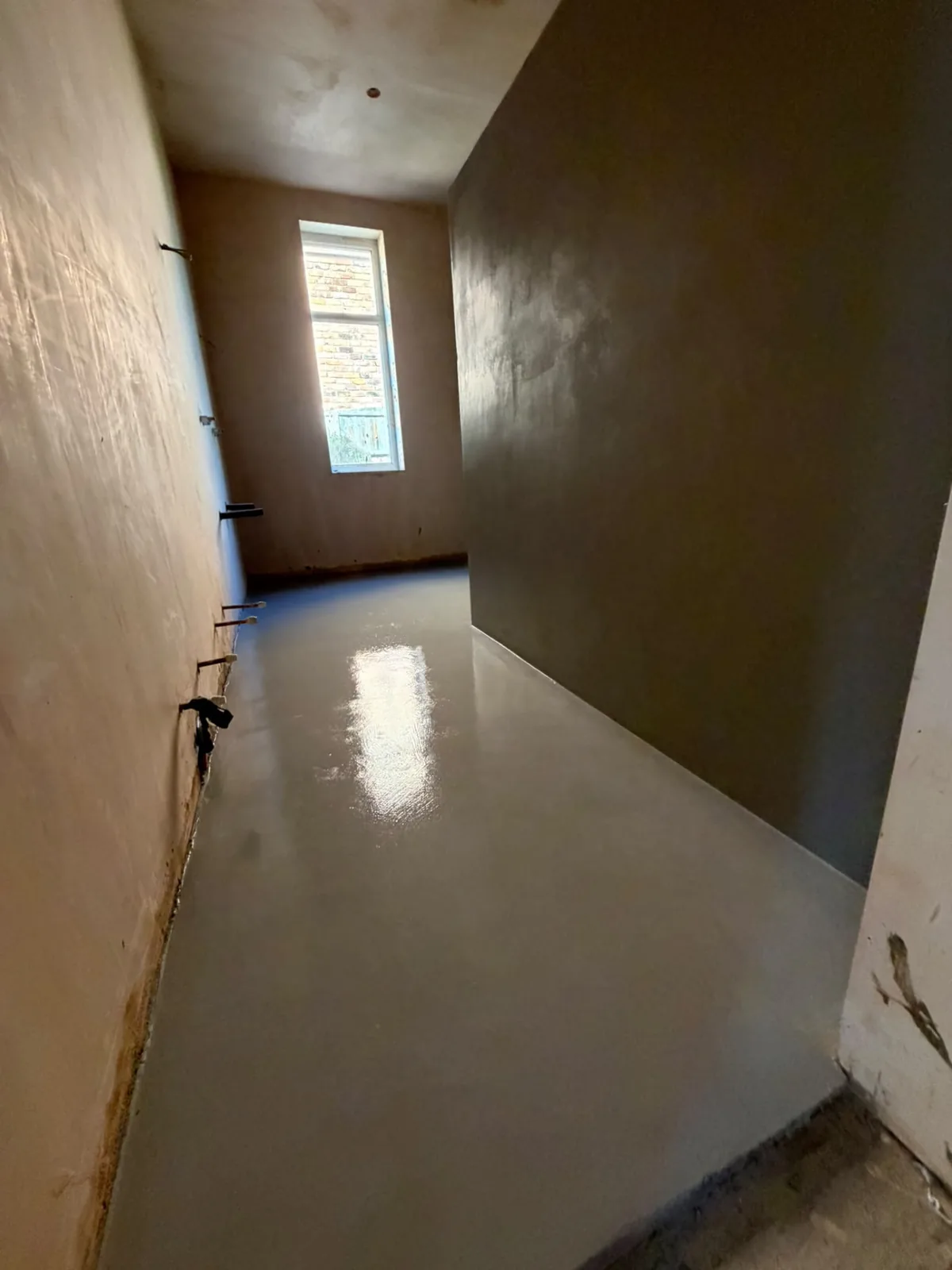
Microcement is a cement-based coating applied by hand in thin layers, typically only a few millimetres thick across the whole floor. Because it bonds to a sound substrate rather than sitting on top as a separate slab, it can go over concrete, screed, tile backer board and, in many cases, existing tiles. The finished floor has no joints and no grout lines, so the eye reads one continuous plane from wall to wall.
It suits anyone who wants the look of polished concrete or honed stone without the build height, the weight or the demolition that usually comes with them. In practice that means kitchen and dining extensions, open-plan ground floors, hallways, utility rooms, bathrooms, retail units, studios, showrooms and cafés. It works particularly well in smaller Leeds and Bradford terraces and Harrogate townhouses, where a continuous surface makes a modest room feel considerably larger than a tiled grid does.
Most people come to us at one of three moments: an extension or renovation is at the point where the floor finish has to be specified, an existing tiled or vinyl floor has come to the end of its life, or underfloor heating has just gone in and the finish needs to conduct heat efficiently. Microcement is confirmed compatible with underfloor heating, and its thin build-up means heat passes through it rather than being buried under a deep layer of screed and stone.
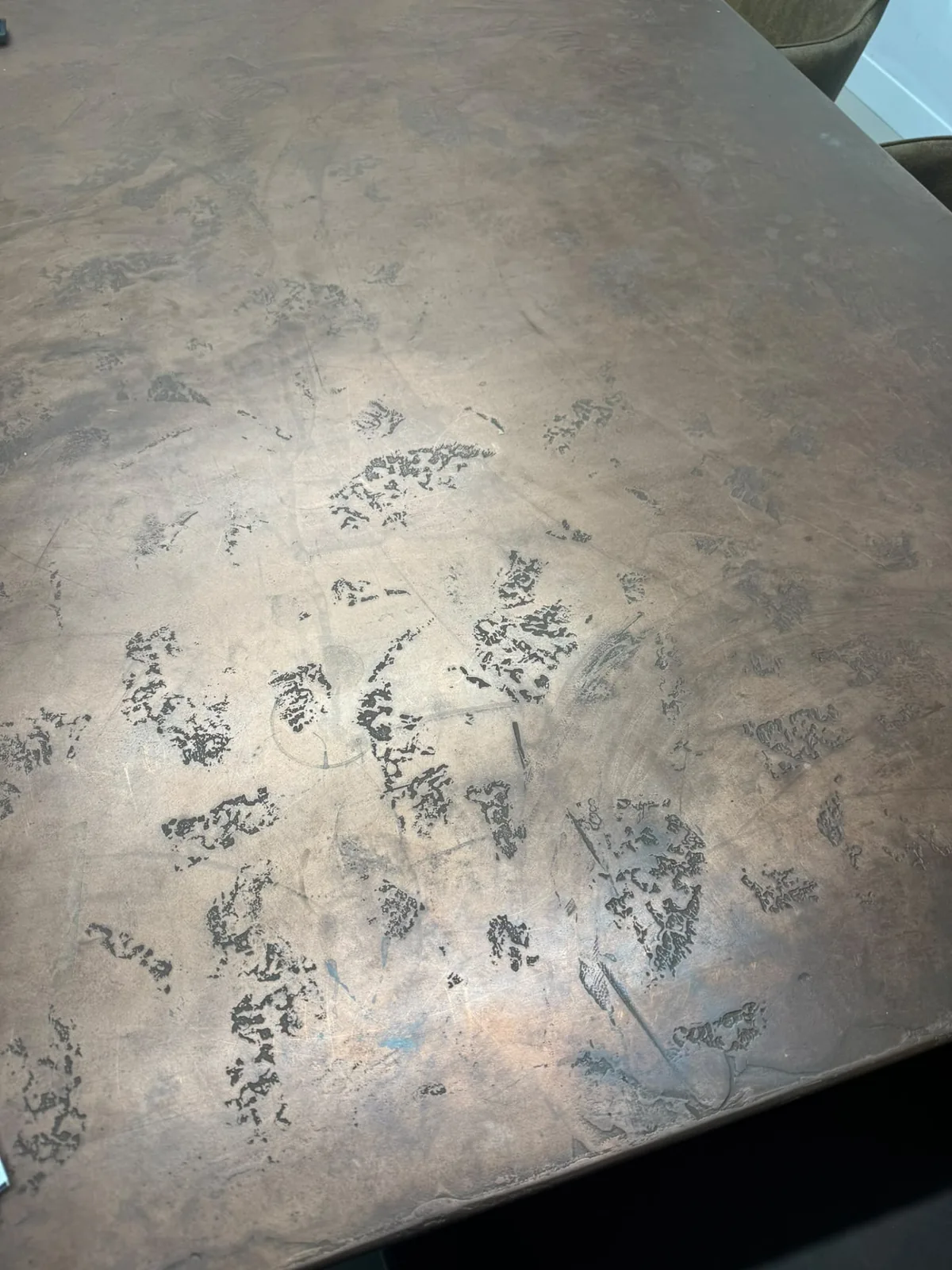
Professional installation matters here more than with almost any other floor finish, because there is no product you can buy that guarantees the result. Two installers working from the same tub will hand you two different rooms: the tone, the movement in the texture, the way the finish turns into a doorway or meets a shower tray and the durability of the sealer all come down to the person applying it. We only install systems we are certified in by the manufacturer, IDEAL WORK UK for microcement, and we tell you honestly when a floor is not ready for one.