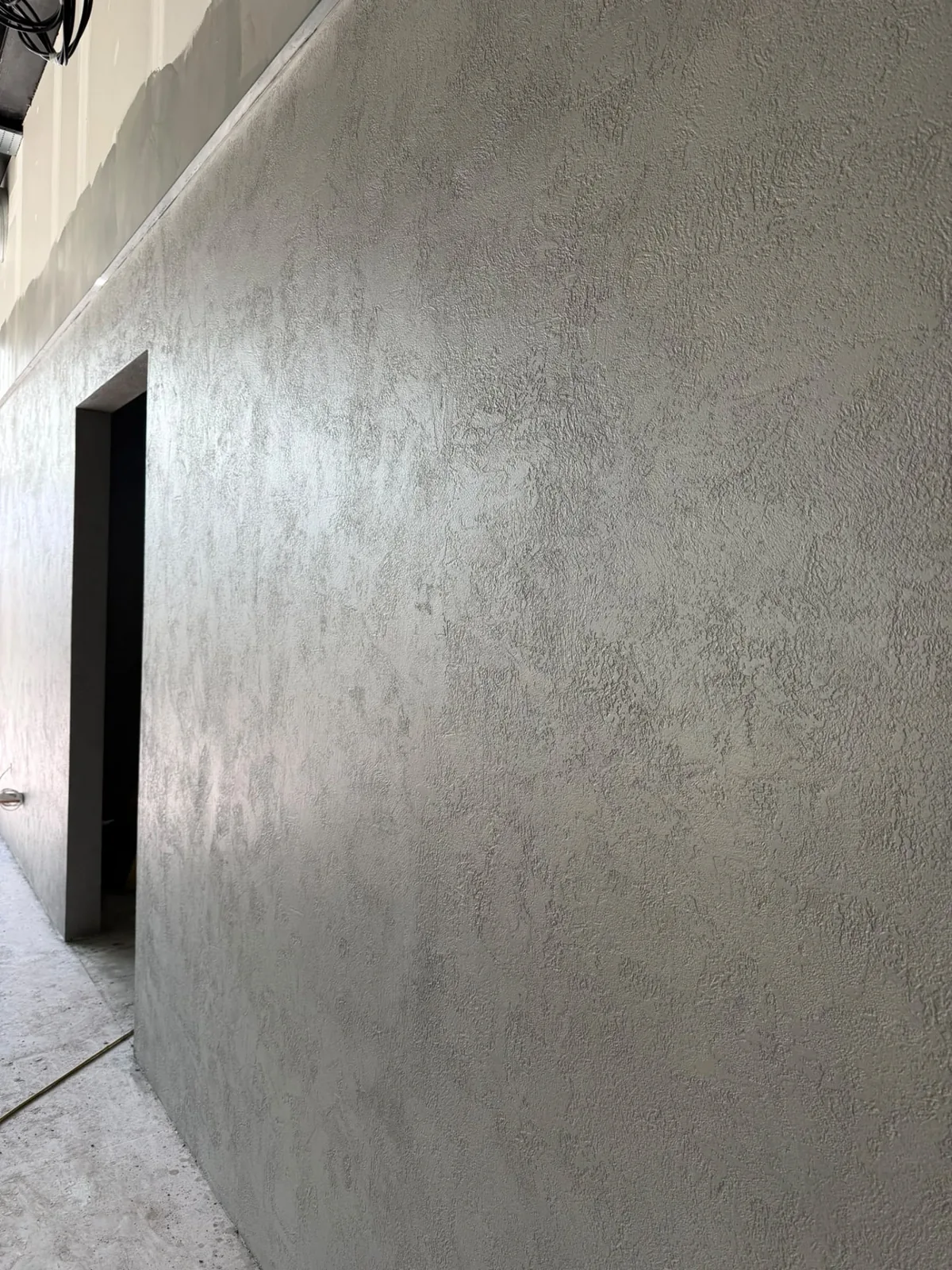
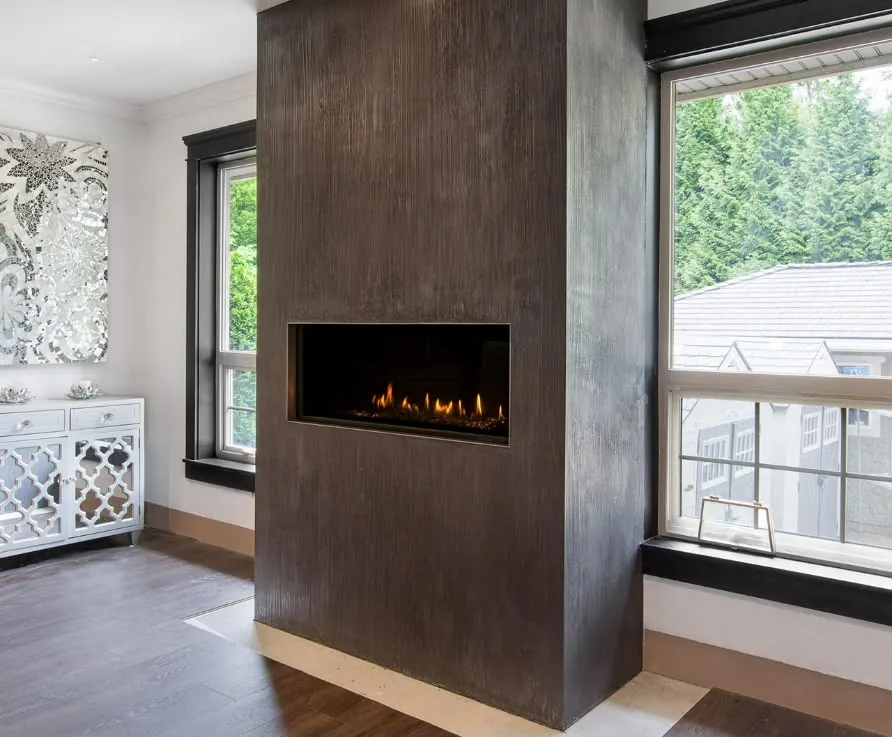
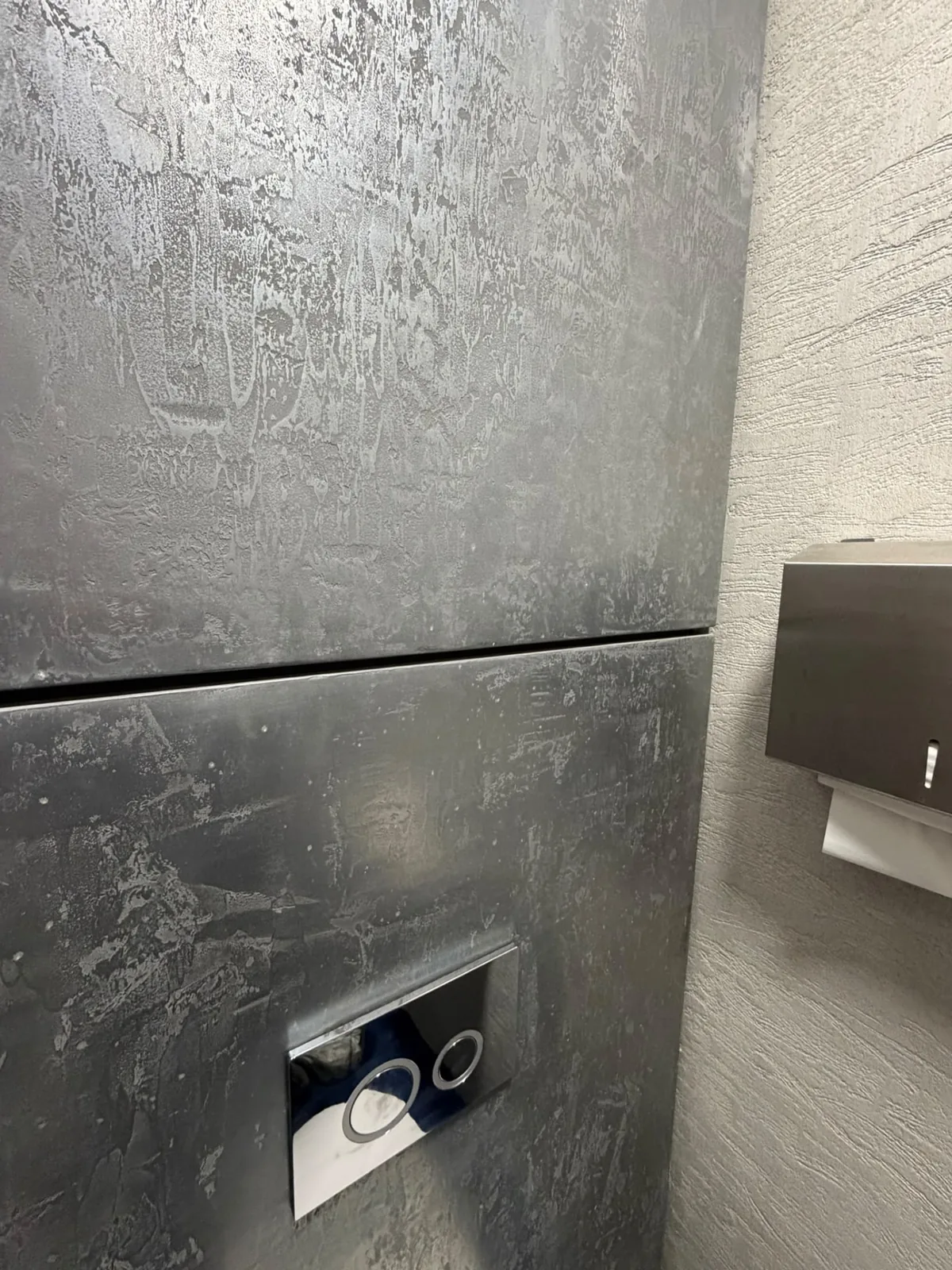
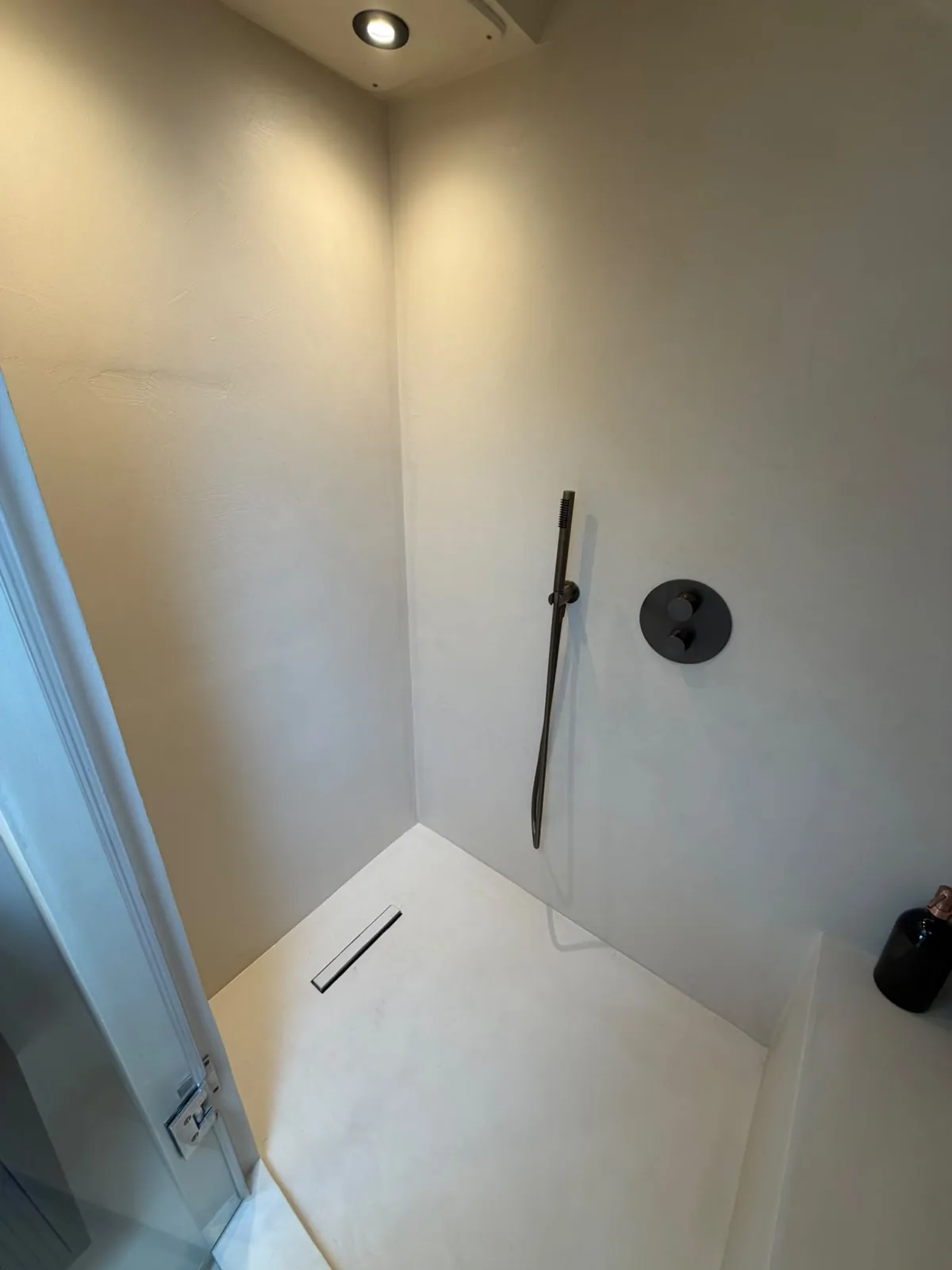
Microcement on a wall is the same family of cement-based coatings we use on floors, applied by hand in thin layers over a prepared wall surface. Because it is trowelled rather than printed or hung, the finish carries movement and depth that changes with the light through the day, and it runs from corner to corner with no seams, sheets or panel joints anywhere in it.
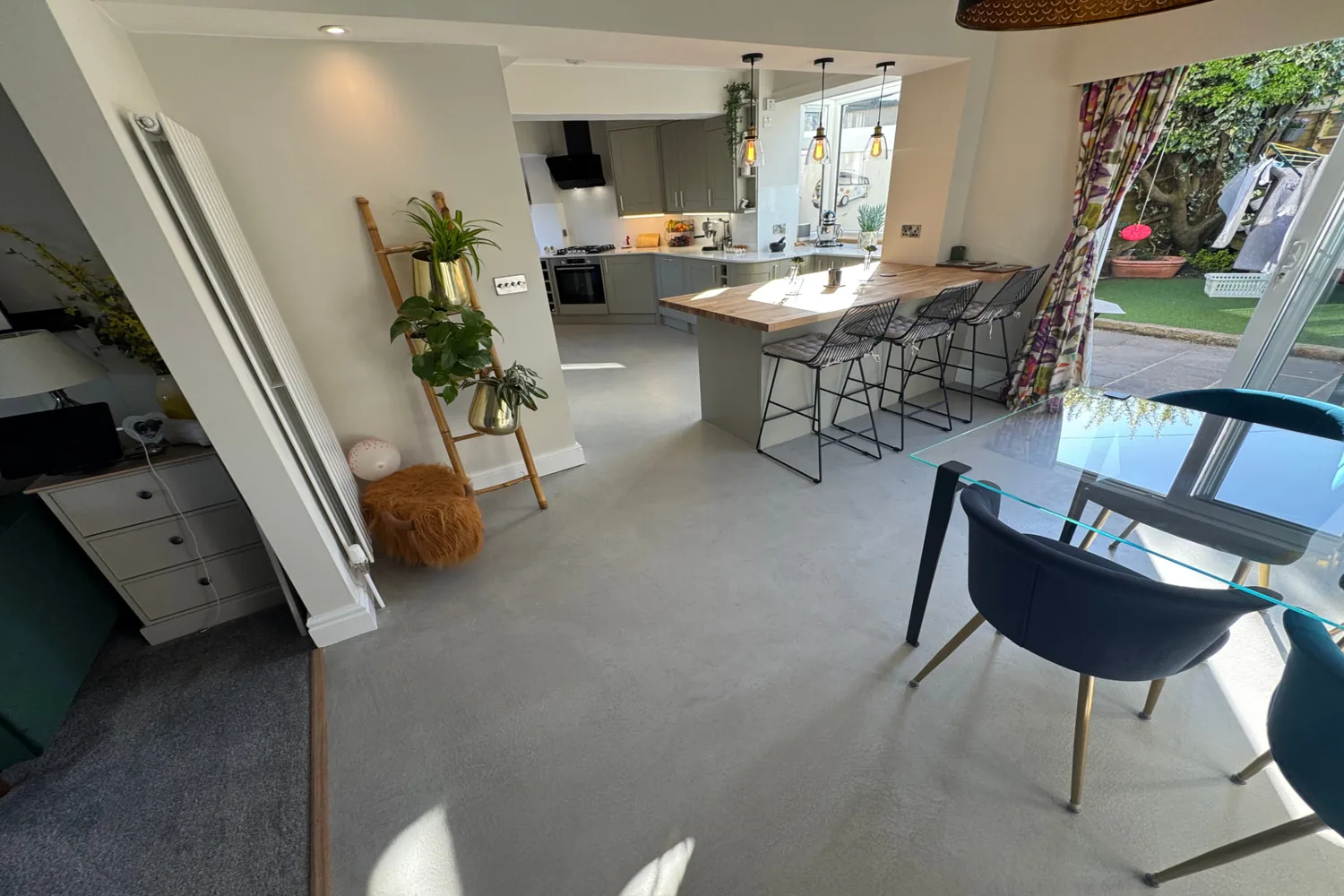
It is chosen where a wall is meant to do more than hold paint: a fireplace chimney breast, a media wall around a television, the wall behind a freestanding bath, a kitchen splashback and return, a stairwell, a hallway that needs presence, or a reception area, bar front and retail interior on the commercial side. It also works as a wrap, floor, wall and worktop in the same tone, which is where seamless surfaces look most deliberate rather than decorative.
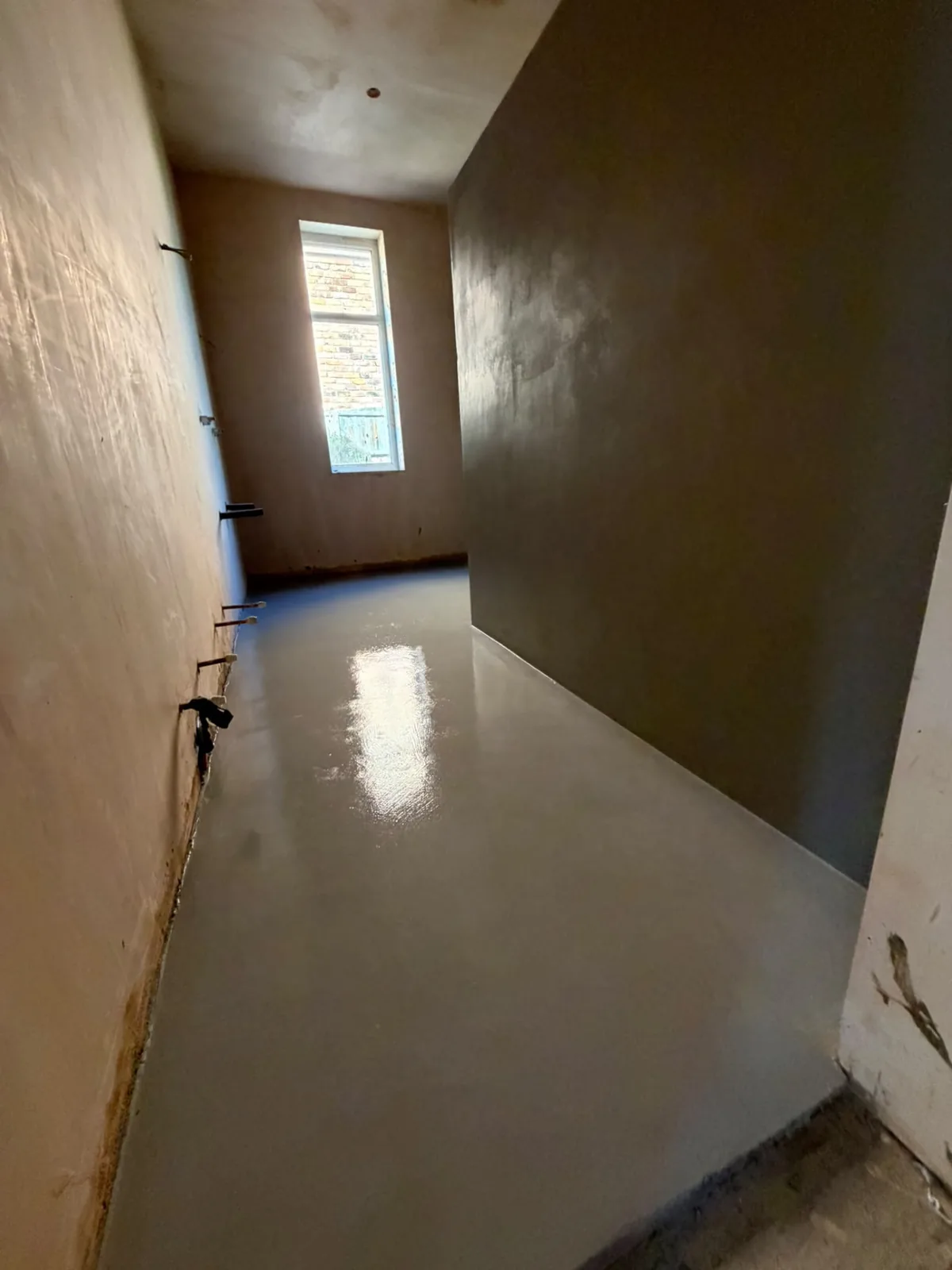
The right moment to specify it is while first-fix is still open. Media walls in particular need cable routes, back boxes, recesses and any fire or television fixings sorted before a seamless finish goes on, because cutting into a continuous surface afterwards means a repair to an area rather than a patch you can hide. Plaster also has to be sound, dry and flat; we tell you at survey stage exactly what the wall needs to be.
This is skilled hand application, not a product you buy. The tone, the direction of the trowel marks, how tight or open the texture reads and the way the finish stops at an edge or an external corner all come from the installer. We only apply systems we are certified in through IDEAL WORK UK, we sample tones in the room before committing, and we say so honestly when a wall is not right for the finish.