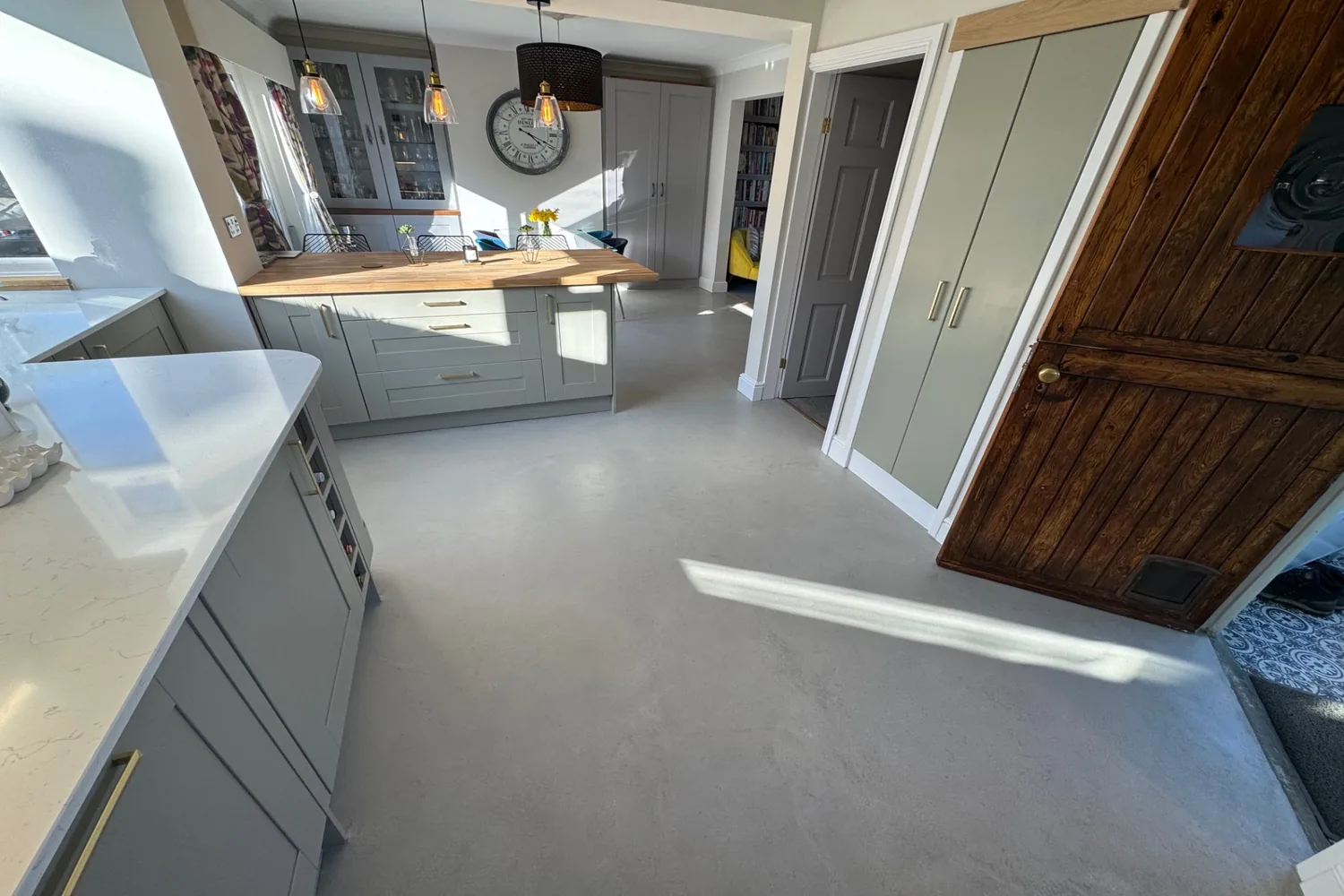
Polished microcement bathroom worktop with stone basins and a seamless microcement wall

Furniture & worktops · Yorkshire

Microcement Worktops& Furniture in Leeds,Bradford & Harrogate

Islands, worktops, vanity units, benches and bespoke pieces wrapped in one seamless finish, the weight and depth of cast concrete without the tonnage, the joins or the lead time of a stone template.

Rated 5.0 on Google · Manufacturer-certified with IDEAL WORK UK · One-year workmanship guarantee

  • IDEAL WORK UK & OX RESIN certified
  • Three years specialising in seamless surfaces
  • £10m public liability cover
  • Free, fixed-price quotes
  • Rated 5.0 on Google

The service

What microcement worktops and furniture are

This is the same certified microcement system we use on floors and walls, applied by hand to a carcass or substrate built to the shape you want. A kitchen island, a run of worktop, a bathroom vanity, a window bench, a bar front, a fireplace hearth or a bespoke piece of joinery is wrapped so the top, edges and returns read as one solid element with no visible joins.

It appeals to clients who want the cast-concrete look without concrete's weight, and who do not want the join lines, standard edge profiles and template-then-wait process that stone involves. Because the finish is applied in place over a purpose-built substrate, shapes that would be expensive or impractical in stone, wrapped waterfall ends, curves, deep aprons, integrated benches, become straightforward.

Most enquiries come at kitchen or bathroom design stage, when the joinery is being drawn. That is the right moment, because the carcass has to be designed for a hand-applied finish: rigid, correctly braced, with the right board and no flex. The joinery or cabinetry is built by your kitchen fitter or joiner; we finish it.

Worktops are the most demanding thing we finish, because they are touched constantly and inspected at close range under kitchen lighting. Heat, water, red wine, lemon, oil and knives all land on them. Which is why substrate, sealer and honest advice about how a surface behaves in daily use matter more here than anywhere else, and why we will tell you where a microcement top is the wrong answer.

What it costs to get wrong

A worktop lives with you at close range, every day

A floor is forgiven at a distance. A worktop is not: you stand over it, prepare food on it, put hot pans and wet glasses on it, and look at it under downlights from a foot away. Any flex in the carcass, any join in the substrate that was not detailed properly, or a sealer chosen for a wall rather than a work surface will show up quickly; as a hairline, a dull patch, or a stain that has gone past the sealer and into the surface.

Staining is the one that hurts. Oil, red wine, coffee, turmeric and citrus are all daily kitchen realities, and an unsealed or wrongly sealed surface takes them permanently. On a hand-applied finish, a stain in the middle of an island cannot be swapped out like a broken tile; it is a repair to an area, blended into a hand-worked surface.

The mistake we are called about most is a carcass that was never built for this. Chipboard tops with no bracing, unsupported overhangs and thin panels all move, and a bonded finish moves with them. Getting the joinery specification right first costs nothing extra at the design stage and cannot be retrofitted once a kitchen is installed.

The mistakes we are called in to correct

  • Building the carcass before checking what substrate a hand-applied finish needs, then discovering it flexes.
  • Unsupported overhangs, breakfast bars and waterfall ends without enough bracing behind the finish.
  • Choosing a wall or floor sealer for a food-preparation surface, which is not the same specification.
  • Putting hot pans straight onto the surface, or cutting directly on it, instead of using trivets and boards.
  • Wiping with bleach, limescale remover or abrasive cream, which attacks the sealer rather than the mark.

Our process

From joinery drawing to a sealed surface

01

Site visit and inspection

We look at the design or the existing carcass, check the substrate, spans, edges and overhangs, and set out what the joinery needs to be for a hand-applied finish.

02

Fixed written quote

One price in writing for the pieces being finished, naming the system and listing what your joiner or fitter must complete first. Quotes are free.

03

Tone, edge and sealer selection

We sample tone and sheen against your cabinetry and lighting, and agree edge profiles and returns. A 45% deposit covers materials and secures your dates.

04

Protection and hand application

The area is protected and the finish is built by hand in thin layers over the prepared carcass, wrapping tops, edges, aprons and returns without visible joins.

05

Sealing, checks and handover

Sealed for its actual use, food preparation, bathroom, bar or bench, checked with you, with clear aftercare. Workmanship is guaranteed for one year.

What you get

Why choose a microcement surface over stone or laminate

No join lines

Tops, edges, returns and waterfall ends are wrapped as one continuous surface, so an island reads as a single cast element rather than assembled slabs.

Shapes stone makes expensive

Curves, deep aprons, integrated benches, banquette seating and non-standard edges are all straightforward when the finish is applied over purpose-built joinery.

The concrete look, a fraction of the weight

You get cast-concrete depth without the tonnage, so there is no structural headache and no crane-and-template exercise to install it.

Tone matched to the room

Worktops, islands, vanities and benches can be matched to a microcement floor, wall or staircase so the whole space shares one palette.

Sealed for how it is used

A food-preparation surface, a bathroom vanity and a bar front are sealed differently, chosen deliberately rather than to one blanket specification.

Certified, insured, guaranteed

IDEAL WORK UK certified application, £10 million public liability cover and a one-year workmanship guarantee, confirmed in writing with your quote.

In detail

Substrates, pieces and daily use in detail

Furniture and worktops depend on what is underneath them and how honestly the surface is specified for daily life. Here is the detail.

What the carcass has to be

A microcement worktop is only as good as the substrate it wraps. It needs to be rigid, properly braced, built from a suitable board, with spans supported and overhangs backed rather than cantilevered on hope. Movement in a carcass telegraphs straight through a thin bonded finish, and that is not something a sealer can rescue.

The joinery itself is built by your kitchen fitter, cabinet maker or joiner. Our part is telling them exactly what the finish needs, board type, bracing, edge build-up, cut-out detailing around sinks and hobs, early enough that it is drawn in, not retrofitted. Tell us at design stage and this becomes a non-issue.

Pieces we finish

Kitchen islands and worktop runs, breakfast bars, waterfall ends, splashbacks and returns; bathroom vanity units, shelves, upstands and integrated basins where the design allows; window seats and benches; bar fronts, counters and reception desks; hearths, fire surrounds and mantel details; and bespoke joinery pieces designed to sit as sculptural objects in a room.

On the commercial side, counters, bar fronts, display plinths and reception desks are common, where the appeal is a hard-wearing surface that photographs well and can be repaired in place rather than replaced. Where a client wants the same tone through a whole interior, we finish surfaces alongside a matching floor or wall.

Sinks, hobs and cut-outs

Cut-outs are where a worktop is most vulnerable; around undermount and inset sinks, taps, drainer grooves and hobs. Those details have to be planned before the finish goes on: positions confirmed, the substrate detailed and edges built so water is not sitting on an unprotected edge every day.

We are honest about behaviour rather than selling the surface as bulletproof. Trivets under hot pans, boards for chopping, and wiping spills rather than leaving them are all normal care for a hand-applied surface, exactly as they are for a natural stone or timber top. Where a client wants a surface that tolerates none of that discipline, we will say so before you commit.

Living with it, and maintenance

Day to day it is a wipe with a soft cloth and a pH-neutral cleaner. Bleach, limescale removers, oven cleaners and abrasive creams attack the sealer, so they are the products to keep away from it. Standing water around a tap and oil left overnight are the two things worth dealing with promptly.

Sealers wear where a surface is used hardest, typically in front of the sink and the hob, and they can be refreshed. That is deliberate: a hand-applied surface can be maintained and repaired in place, which is more than can be said for a chipped stone slab or a delaminated laminate top.

Common questions

Answers before
you commit

Anything not covered here, ask us directly on 07722 927058. Monday to Friday, 8am–6pm.

Can you put microcement on my existing worktops?+

Sometimes, if the existing top is rigid, sound and suitable to bond to, and the edges can be detailed properly. We assess it at the survey and tell you plainly whether it will work or whether a new carcass is the better route.

How much does a microcement worktop or island cost?+

We quote a fixed price for the pieces being finished rather than a rate per metre, because cost depends on the shape, edges, cut-outs, returns and access. Quotes are free, and a 45% deposit covers materials and secures your dates.

Do you build the units as well?+

No. The carcass or joinery is built by your kitchen fitter, cabinet maker or joiner. We tell them exactly what the substrate, bracing and edge build-up need to be, ideally at design stage, and then we apply the finish.

Is it heat resistant? Can I put a hot pan down?+

Treat it as you would natural stone or timber: use trivets. It is a hand-applied cement-based surface with a sealer, and the sealer is the part that suffers from direct heat, so trivets and boards are part of normal care.

Will it stain from wine, coffee or oil?+

Sealed correctly and wiped rather than left to sit, everyday spills are fine. Oil, red wine, citrus and turmeric left overnight are the ones to deal with promptly. We select the sealer specifically for food-preparation use rather than reusing a floor specification.

Can I cut directly on the surface?+

No, use a board, exactly as you would on stone. Cutting directly damages the sealer, which is what protects the surface underneath.

How long does it take?+

The finish is built in layers with curing time between coats, and the sealer needs time afterwards before the surface is used normally. We confirm the days, the dates and when you can use the kitchen in writing with the quote.

Can it be repaired if it gets damaged?+

Yes, because the surface is hand-applied, it can be repaired and resealed in place rather than replaced as a slab. Blending a repair into a hand-worked finish is skilled work, which is another reason correct substrate and sealing at the start matter.

Can you match the worktop to my floor or walls?+

Yes, and it is a common brief. We sample the combination in the room, because the same pigment reads differently on a worktop under downlights than it does on a floor in daylight.

Which areas do you cover, and are you insured?+

Leeds, Bradford, Harrogate, York, Ripon, Sheffield, Manchester, Windermere and Kendal, from Menston near Ilkley. We hold £10 million public liability cover, are certified with IDEAL WORK UK and OX RESIN, and guarantee our workmanship for one year.

Examples of our work

A selection of completed projects

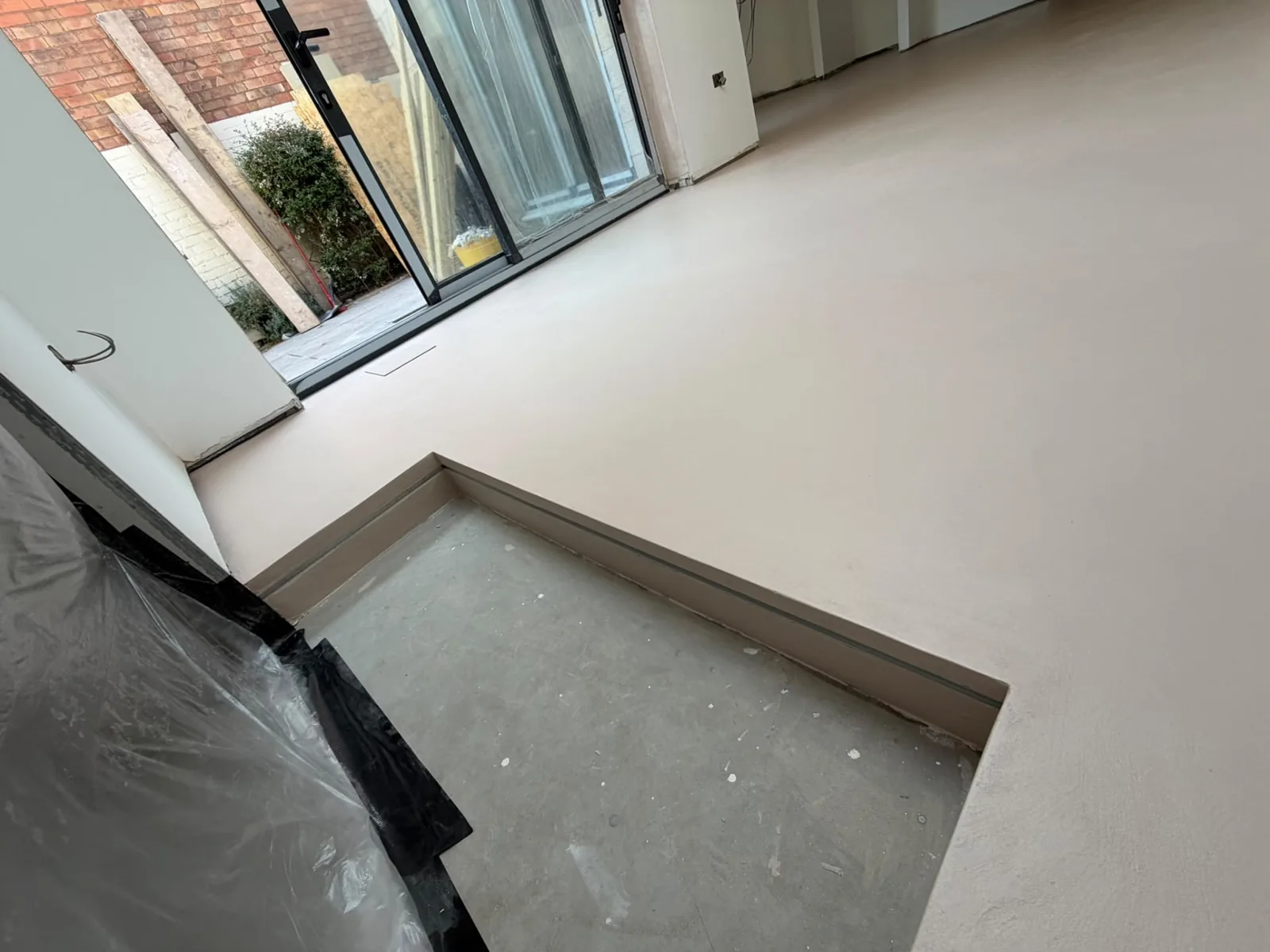
Microcement floor edge detail finished flush against a step
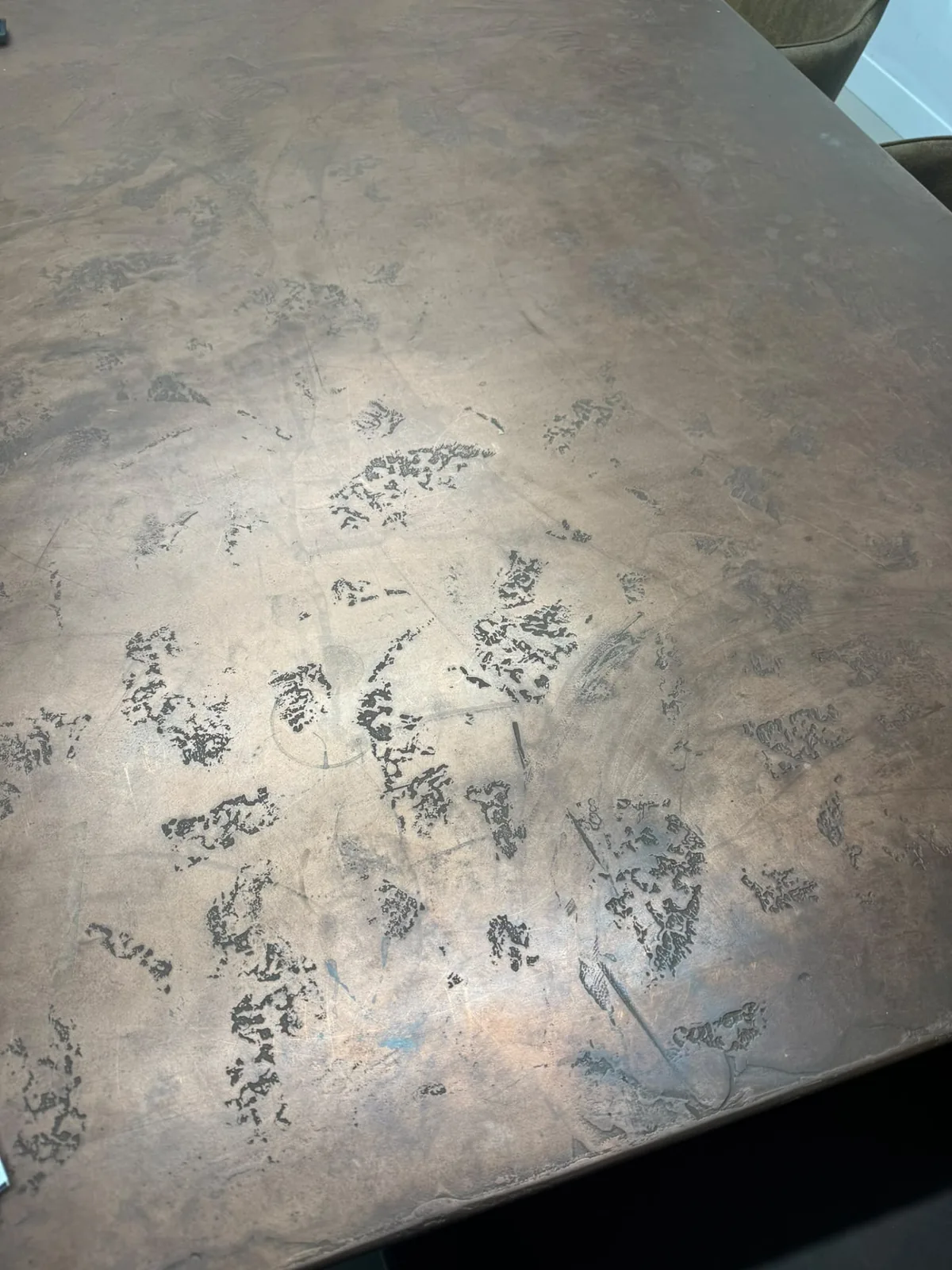
Puro Metallio liquid metal tabletop with a mottled bronze finish
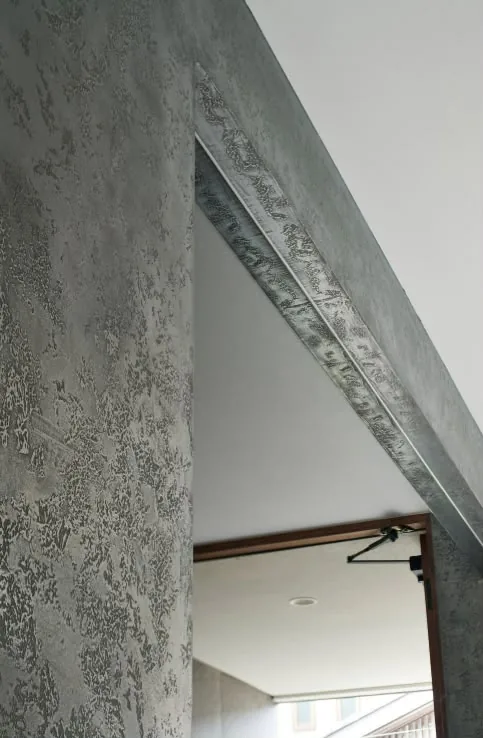
Liquid metal wall finish wrapped seamlessly around a doorway reveal
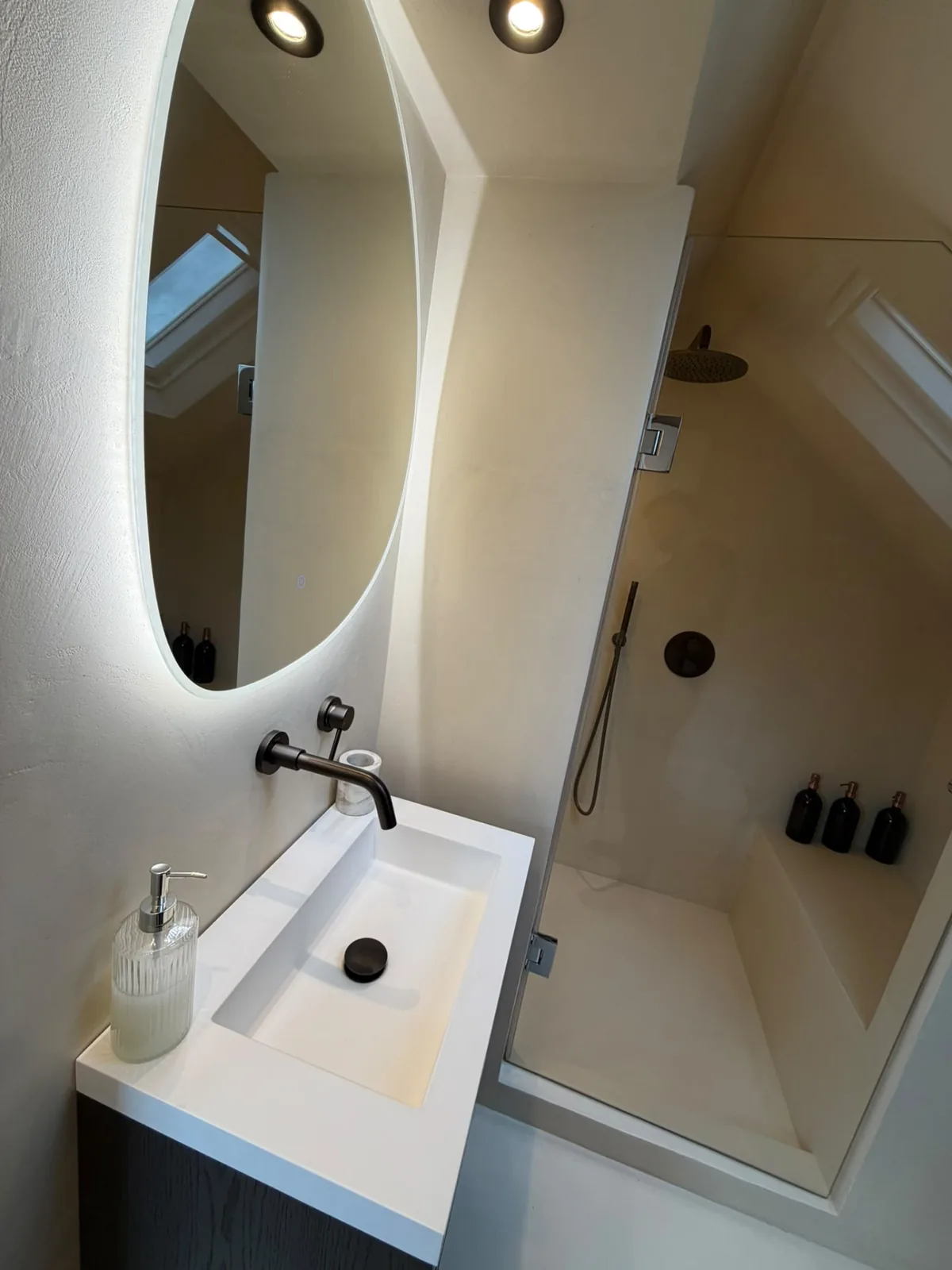
Loft bathroom with microcement walls, a mirror and walk-in shower
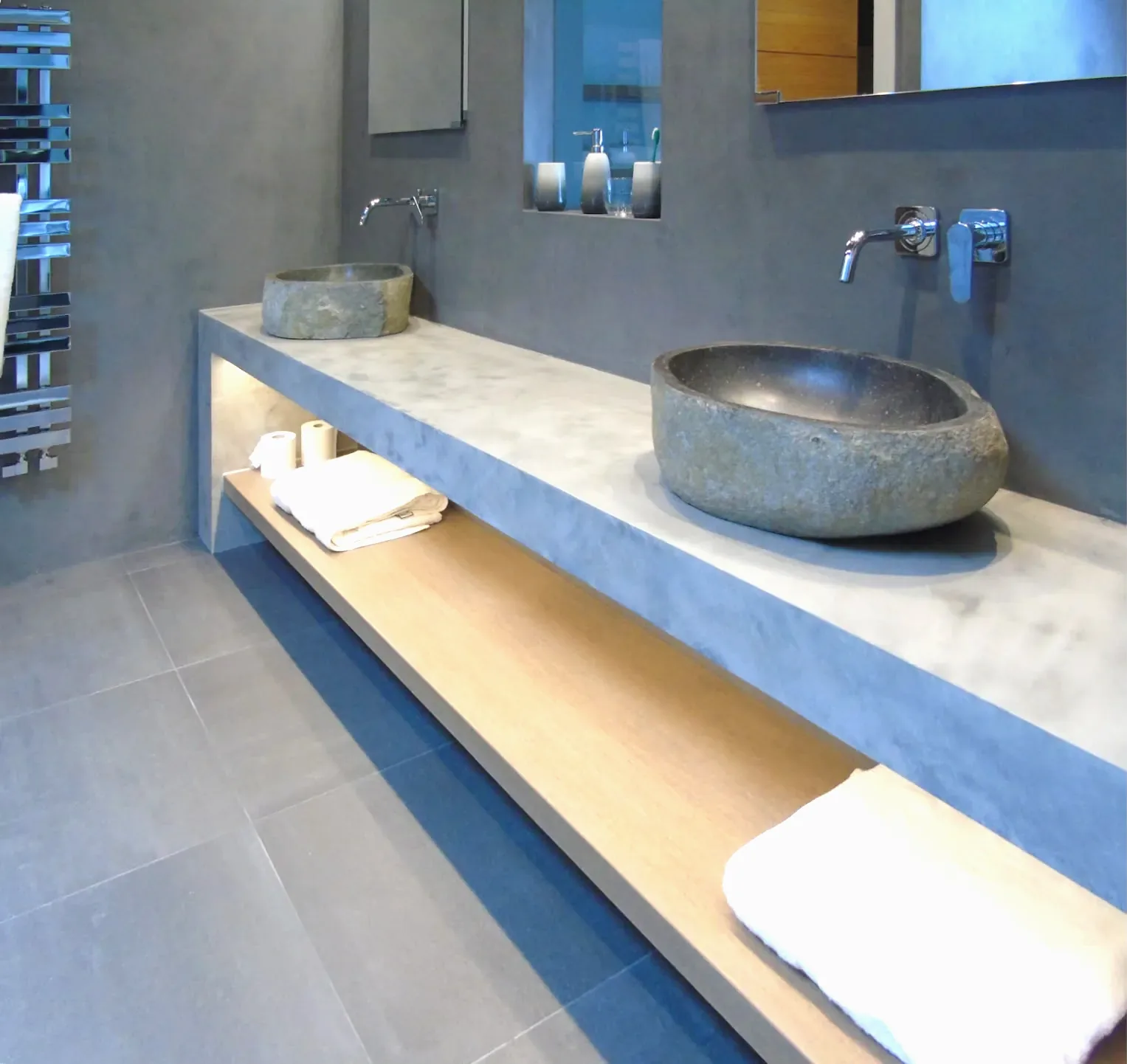
Grey microcement kitchen floor running seamlessly through to a hallway
Puro Metallio fireplace surround finished in decorative liquid metal
See more completed work

Related services

All services

Where we install it

We are based in Menston, near Ilkley, and also install across Sheffield, Ripon, Windermere and Kendal. See all service areas or read more about what we do.

Get a fixed price for your island, worktop or vanity

Send us the design or a photo of the units. We will tell you what the joinery needs to be, which finish suits the way you will use it and exactly what it will cost.

Manufacturer-certified with IDEAL WORK UK and OX RESIN · £10m public liability cover · One-year workmanship guarantee · Quotes are free, with a 45% deposit only once you go ahead.

Call NowFree Quote