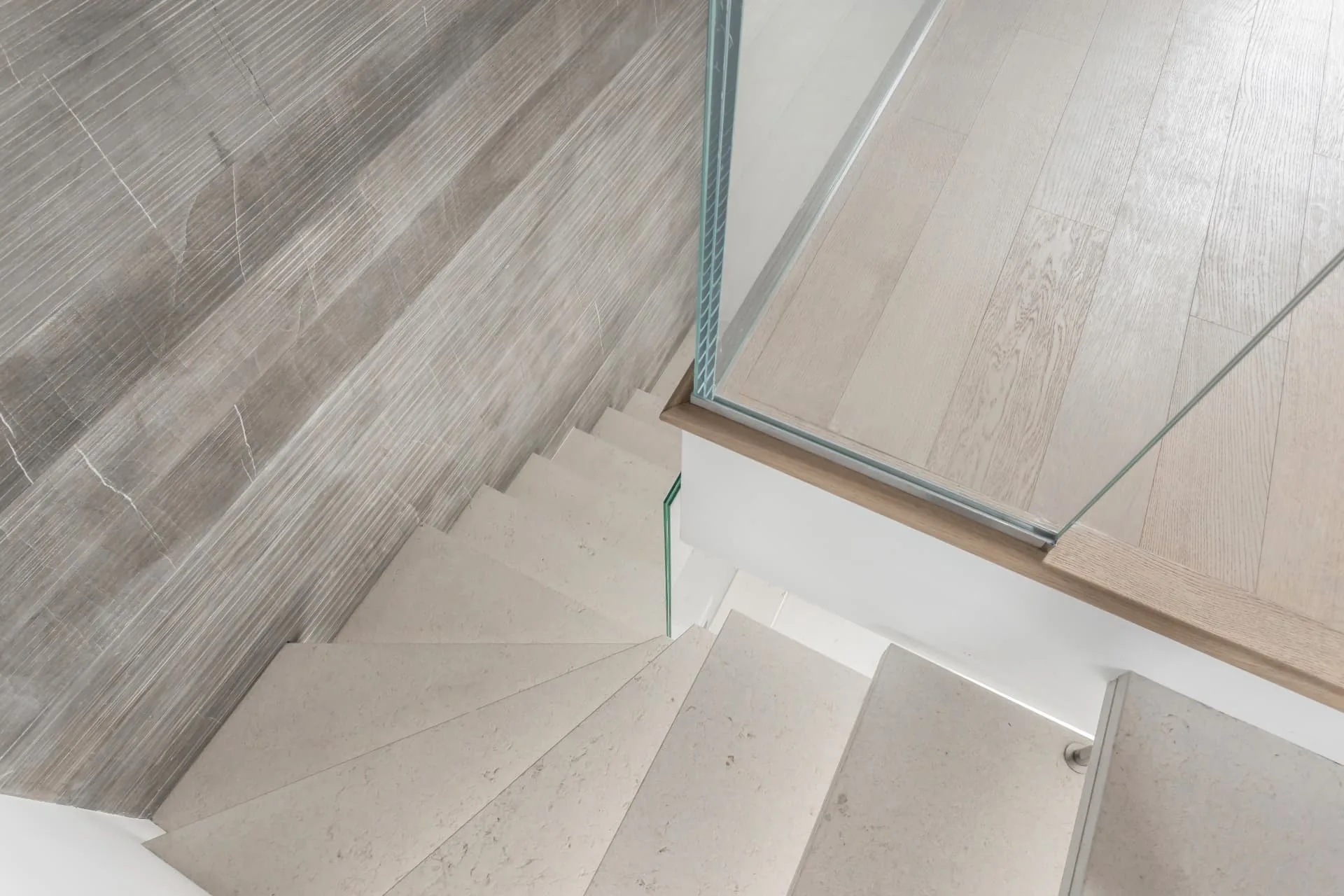
Seamless microcement staircase with pale stone-toned treads and a glass balustrade

Microcement stairs · Yorkshire

Microcement Stairsin Leeds, Bradford& Harrogate

Treads, risers and stringers finished as one continuous surface, so a staircase stops being a carpeted afterthought and becomes the sculpted centrepiece of the hallway, priced as one fixed figure before we start.

Rated 5.0 on Google · Manufacturer-certified with IDEAL WORK UK · One-year workmanship guarantee

  • IDEAL WORK UK & OX RESIN certified
  • Three years specialising in seamless surfaces
  • £10m public liability cover
  • Free, fixed-price quotes
  • Rated 5.0 on Google

The service

What a microcement staircase involves

A microcement staircase is a hand-applied, cement-based finish taken across the treads, risers, stringers and often the surrounding wall as one flowing surface. Because the coating is only a few millimetres thick and worked by hand, the stair keeps its dimensions and gains a sculpted, monolithic look that carpet, laminate or tile cannot produce.

It suits open-plan hallways where the staircase is on show, split-level extensions, entrance halls in Harrogate and Ilkley townhouses, floating and cantilevered flights, and commercial receptions and showrooms where the stair is part of the first impression. It is chosen most often by clients who have already committed to a seamless floor and do not want the stair to interrupt it.

The right time to book is once the stair structure is finalised, and after any carpet, nosings, spindles or balustrade changes are decided. A seamless finish is applied over a structure that will not move, so any strengthening, replacement of treads, closing of open risers or joinery alterations happen first, usually by a joiner, not by us.

Stairs are the most technically demanding surface we finish. Every step is an external corner at nose height, every tread is walked on directly, and the whole flight is inspected at close range in daylight from the hallway. That combination of edges, wear and visibility is exactly why staircases should be applied by a certified installer with the flight to their name, rather than treated as an extension of floor work.

What it costs to get wrong

Stairs are the hardest-worked surface in the house

A hallway floor takes traffic; a staircase takes the same traffic concentrated onto the front two inches of every tread, several times a day, often with shoes, luggage, prams and pets. Nosings and edges are where wear starts, and where a poorly built or under-sealed finish chips, dulls or shows a line. On a stair that is impossible to ignore, because you look straight at the nosings as you climb.

Movement is the second problem. Timber stairs flex, creak and shrink; treads that were never fixed properly move under load. A bonded finish follows that movement, so a flight that was not made rigid first will telegraph it. Squeaks and loose treads should be resolved by a joiner beforehand, not covered over and hoped for.

There is also a practical consequence people underestimate: a staircase in progress is not a floor you can walk around. Access to the upstairs of the house is affected while layers cure, which is why the programme and the dates need to be agreed honestly at quoting stage rather than discovered mid-job. We tell you upfront how long the flight will take and how access will work.

The mistakes we are called in to correct

  • Applying a seamless finish over a stair that still creaks or has loose treads, instead of having a joiner make it rigid first.
  • Leaving balustrade, spindle or newel changes until after the finish is on, then cutting into a continuous surface.
  • Under-specifying the sealer, so nosings dull and mark within months of daily use.
  • Choosing a high-sheen finish on a family staircase where a lower sheen would hide everyday wear far better.
  • Booking the work without agreeing how the household will get upstairs while the layers cure.

Our process

How we finish a staircase

01

Site visit and inspection

We check the flight for movement, loose or creaking treads, nosing detail and existing coverings, and set out what a joiner needs to do first.

02

Fixed written quote

One price in writing for the whole flight, naming the system and listing any joinery or making good needed beforehand, plus how access will work. Quotes are free.

03

Tone, texture and sheen selection

Samples in the hallway under its own light, with sheen chosen for wear as well as looks. A 45% deposit covers materials and secures your dates.

04

Protection and hand application

We protect the hall and landing, prime the structure, then build treads, risers, stringers and any adjoining wall by hand in thin layers with edges worked consistently.

05

Sealing, checks and handover

The flight is sealed for foot traffic, checked with you step by step, and we confirm when it can take normal use. Workmanship is guaranteed for one year.

What you get

What a seamless staircase gives you

One surface, hall to landing

The stair can carry the same tone as a microcement floor, so a hallway reads as one continuous space rather than floor, then carpet, then floor again.

Nothing for dust to live in

No carpet fibres, no nosing strips and no grout joints on treads; a sealed, wipeable surface, which matters in allergy-conscious households.

A sculpted, architectural look

Because the finish wraps treads, risers and stringers without joints, the flight looks cast rather than covered, the effect people expect from poured concrete stairs.

Keeps the stair's dimensions

At a few millimetres thick, the finish does not raise tread heights or eat into headroom the way a thick covering or stone cladding does.

Built for the wear stairs get

Sealer and sheen are selected for concentrated foot traffic on nosings, not borrowed from a low-traffic floor specification.

Certified, insured, guaranteed

IDEAL WORK UK certified application, £10 million public liability cover and a one-year workmanship guarantee, confirmed in writing with your quote.

In detail

Structures, detailing and wear in detail

Stairs vary more than floors do. This is what we can finish, what has to happen before we arrive, and how the flight is detailed to survive daily use.

Stair structures we can work over

Concrete stairs are the most straightforward, since they are rigid and stable by nature. Timber flights can be finished where they have been made properly rigid, open risers closed in where needed and treads securely fixed, the finish follows the structure, so the structure has to stop moving first.

Any strengthening, tread replacement, closing of open risers, packing out or balustrade alteration is joinery work carried out by others before we start. We identify it at the survey and put it in writing with the quote, so it can be programmed rather than discovered on day one.

Nosings, edges and junctions

The nosing is the make-or-break detail on a staircase: it is the most looked-at edge in the house and the first place wear appears. We build and work edges deliberately, keeping the profile consistent from the bottom step to the top so the flight reads as one piece rather than a series of coated steps.

Junctions matter just as much, where the stair meets a hall floor, a landing, a skirting, a stringer or a wall finish, and where balustrade and newel posts pass through. Where a matching microcement wall runs alongside the flight, the two are planned together so the tone and texture carry across.

Sealing for concentrated foot traffic

A staircase is sealed harder than a spare-bedroom floor because the loading is concentrated. We select the sealer for daily footfall, shoes and grit brought in from outside, and we choose sheen with wear in mind: a lower sheen on a busy family staircase hides everyday marking far better than a high gloss, which flatters a showroom flight but shows every scuff at home.

Sealers wear and can be refreshed over time. On a stair that is normal long-term maintenance, not a defect, and it is far less disruptive than replacing a carpet runner every few years.

Homes and commercial flights

In homes, most staircases we finish sit in open-plan hallways and extensions where the flight is visible from the living space, and they are usually specified alongside a matching hall floor. Access has to be planned around curing times, so we agree the programme with you before the deposit rather than after.

In commercial interiors, receptions, showrooms, studios, retail, the flight is often part of the brand impression, and the priorities shift to appearance under artificial light, cleaning regime and minimising closure. Where we can, we programme those flights around opening hours to keep the space usable.

Common questions

Answers before
you commit

Anything not covered here, ask us directly on 07722 927058. Monday to Friday, 8am–6pm.

Can you apply microcement to timber stairs?+

Yes, provided the flight has been made properly rigid first, treads securely fixed, no flex, no creaking, and open risers closed in where needed. That joinery is carried out by others before we start, and we set out exactly what is needed at the survey.

How much does a microcement staircase cost?+

We quote a fixed price for the whole flight rather than a rate per step, because cost depends on the number of steps, whether stringers and adjoining walls are included, the structure and the access. Quotes are free, and a 45% deposit secures your dates.

How long does a staircase take?+

Stairs are built in layers with curing time between coats and after sealing, so a flight takes several days. We confirm the days, the dates and how access to upstairs will work in writing with the quote.

Can we still use the stairs while you work?+

Access is restricted while layers cure, which is why we agree the programme with you before booking rather than during the job. Tell us about the household when you call and we will plan the flight around it as far as the curing times allow.

Will the nosings chip or wear?+

Edges take the most wear on any staircase, which is why nosings are built and worked deliberately and sealed for concentrated foot traffic. Sealers wear over years and can be refreshed, that is maintenance, not failure.

Is a microcement staircase slippery?+

Sheen and sealer selection affect how a tread feels underfoot, so we discuss it specifically for stairs at selection stage rather than carrying over a floor specification. Tell us who uses the stairs, children, older relatives, pets, and we will factor it in.

Can you match the stairs to my hallway floor?+

Yes, and it is the most common reason clients ask for it. We sample the combination in the hallway itself, because the same tone reads differently on a horizontal tread and a vertical riser.

Do you remove the old carpet and nosings?+

Tell us what is in place at the survey. Removing coverings, nosing strips and any joinery alterations are handled before the finish goes on, and we will confirm in writing what we are doing and what needs to be arranged with another trade.

How do I clean and maintain it?+

Vacuum or brush the grit off and wipe with a pH-neutral cleaner. Avoid bleach and abrasive products, which attack the sealer. A doormat at the entrance does more for a stair finish than any cleaning product.

Which areas do you cover, and are you insured?+

Leeds, Bradford, Harrogate, York, Ripon, Sheffield, Manchester, Windermere and Kendal, from our base in Menston near Ilkley. We carry £10 million public liability cover, hold IDEAL WORK UK and OX RESIN certification, and guarantee our workmanship for one year.

Examples of our work

A selection of completed projects

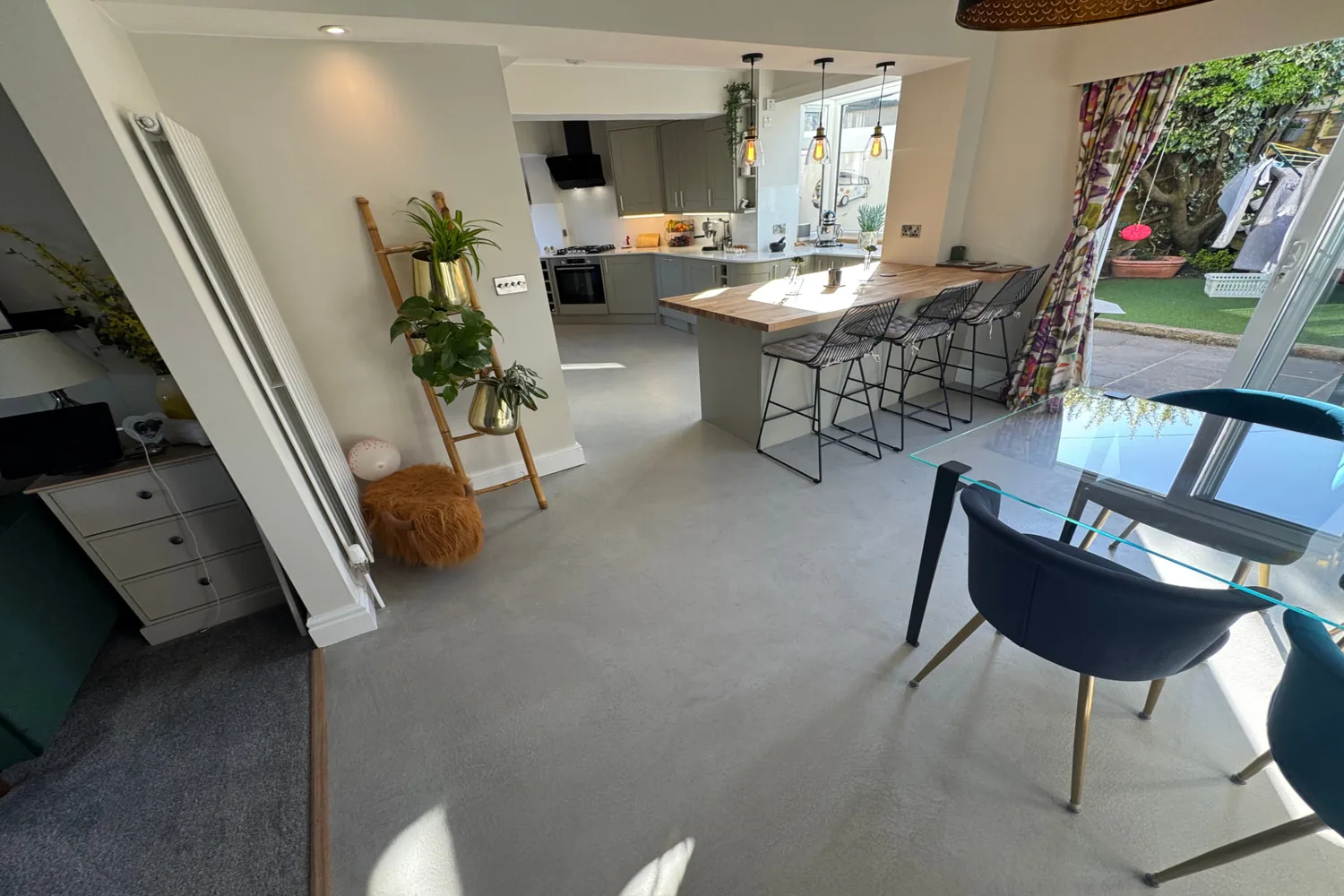
Open-plan kitchen and dining room with a seamless grey microcement floor
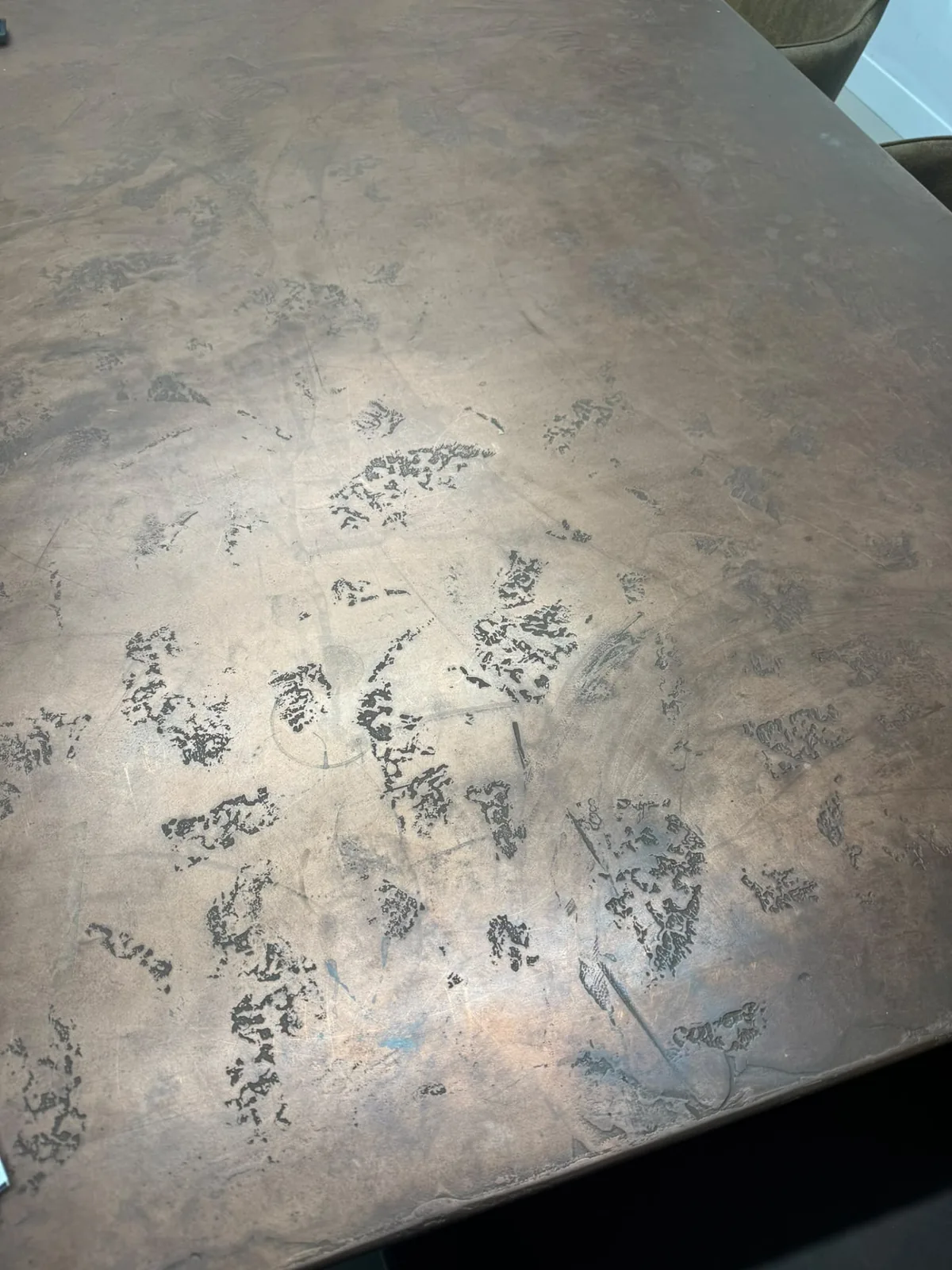
Puro Metallio liquid metal tabletop with a mottled bronze finish
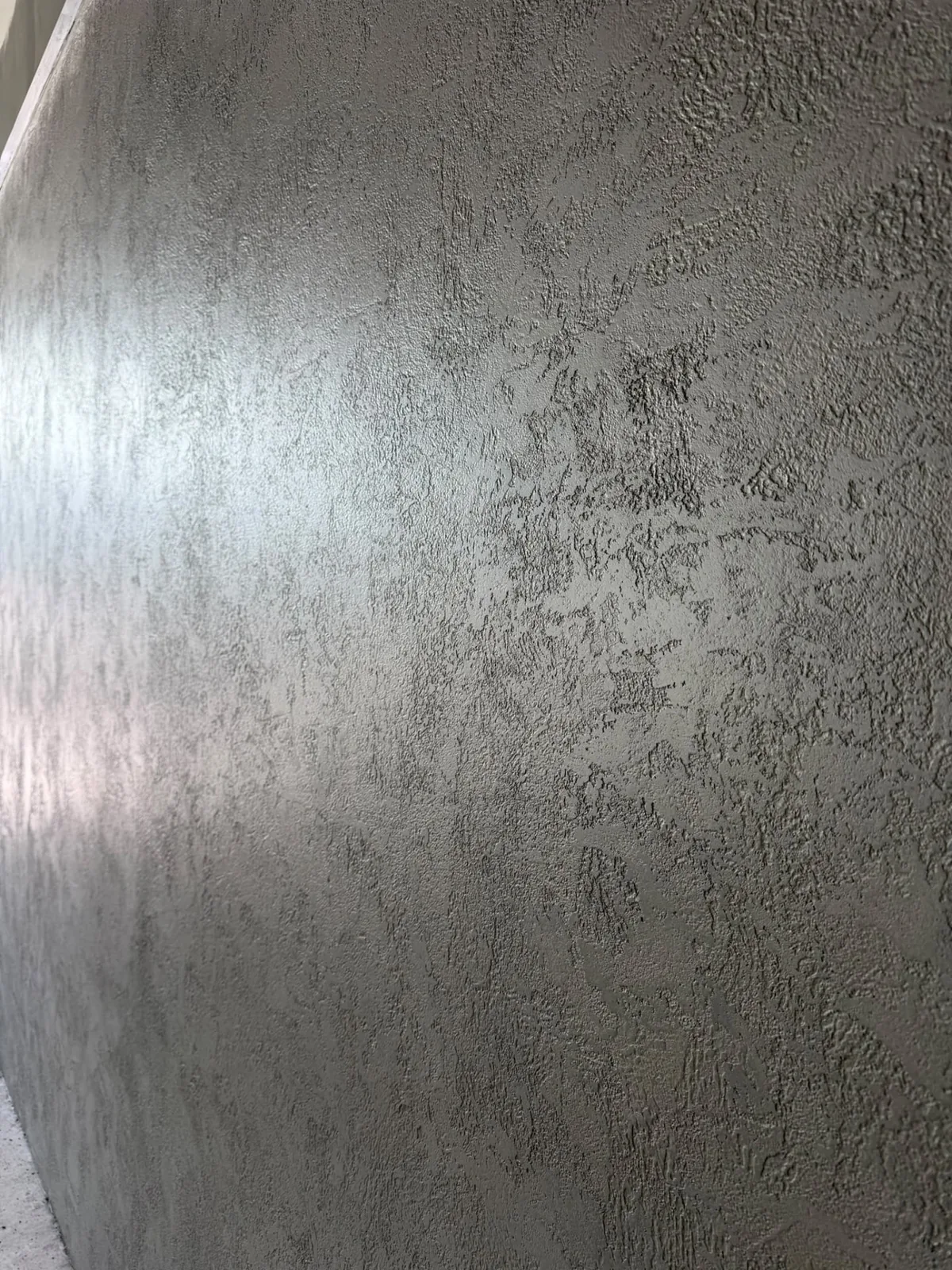
Textured grey microcement wall finish showing hand-worked movement
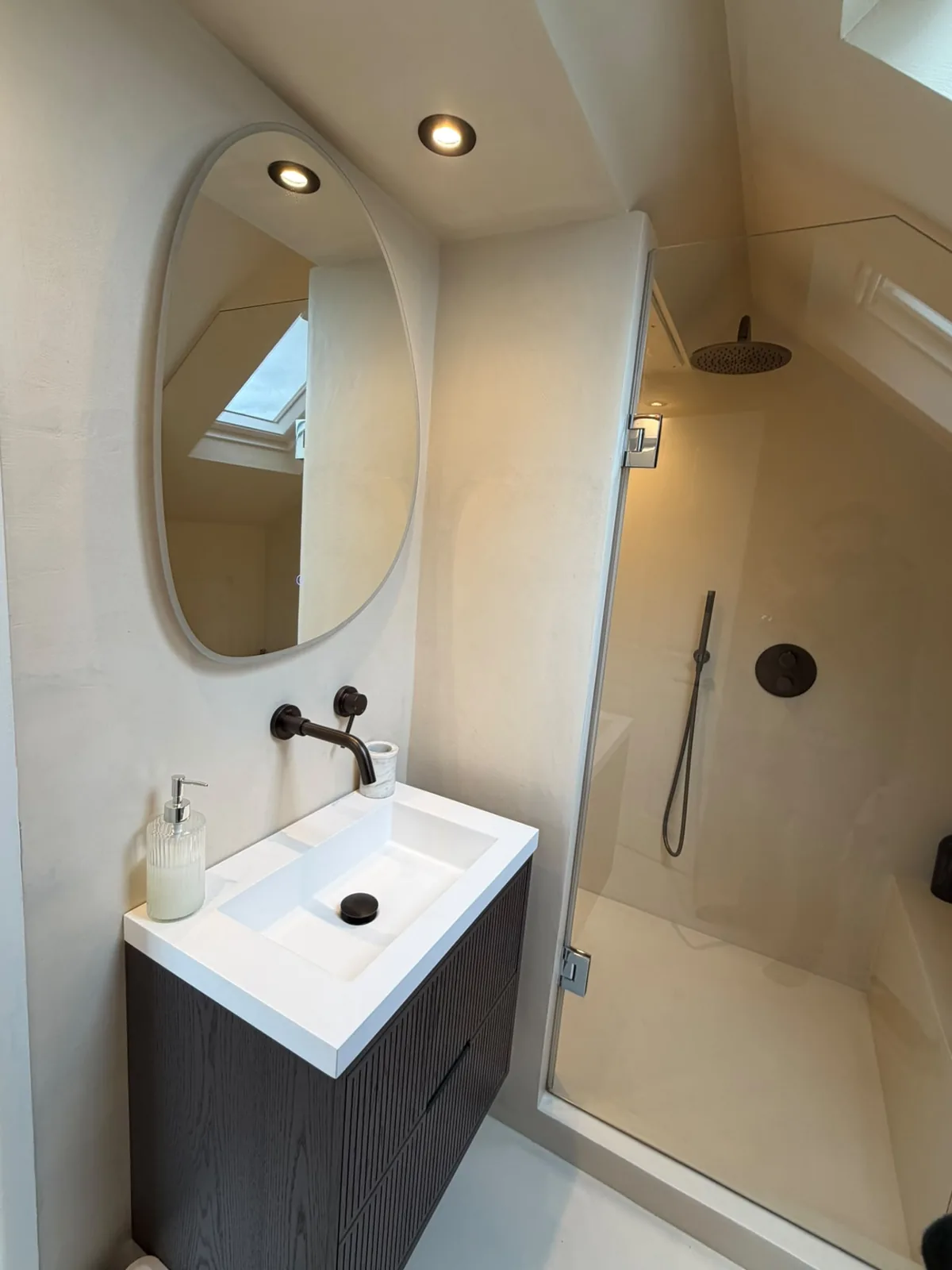
Loft bathroom finished in microcement with a shower and vanity unit
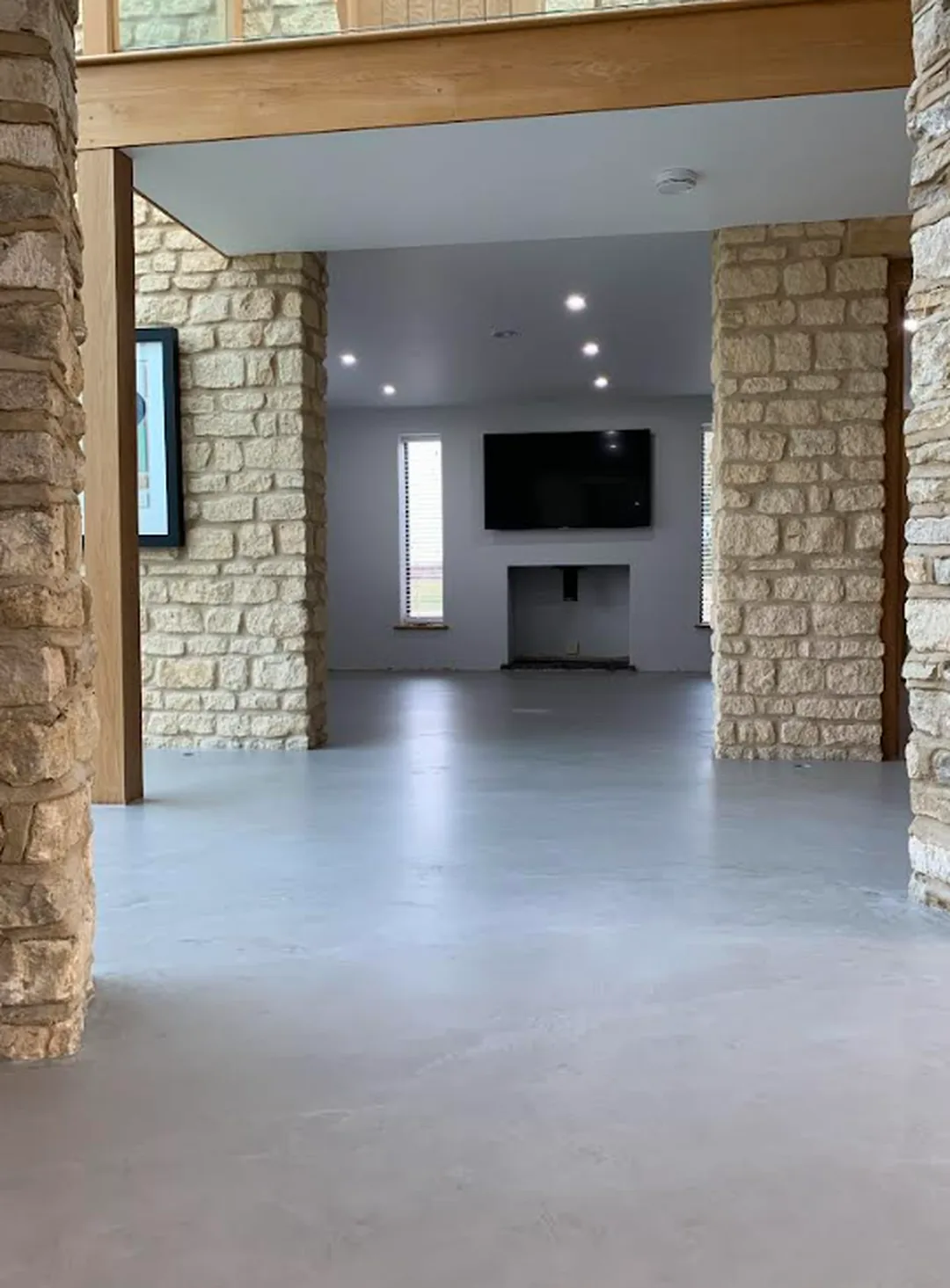
Seamless microcement floor in a stone barn conversion living space
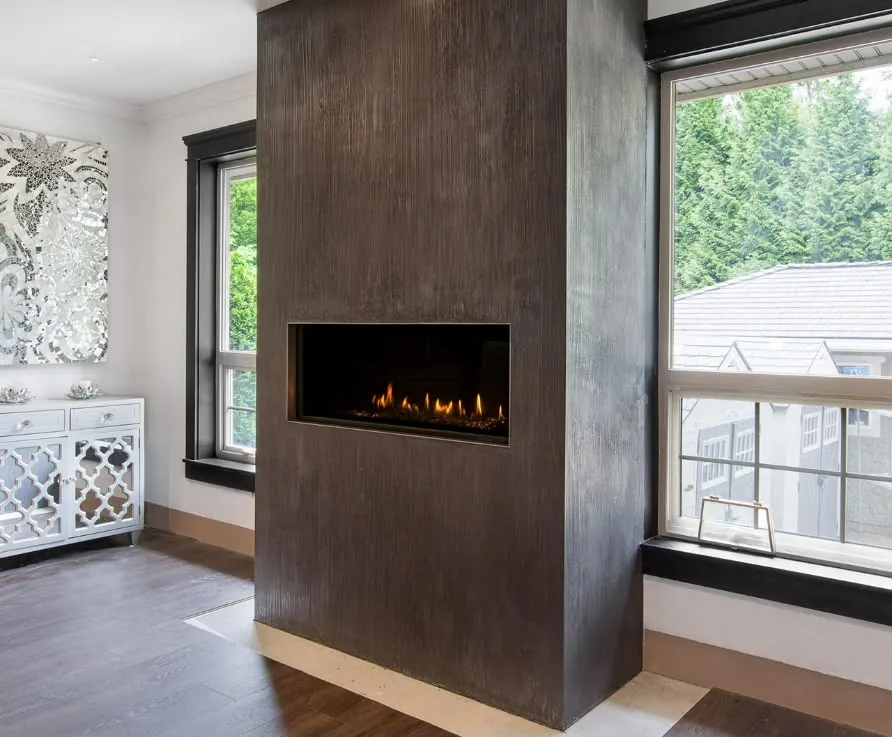
Puro Metallio fireplace surround finished in decorative liquid metal
See more completed work

Related services

All services

Where we install it

We are based in Menston, near Ilkley, and also install across Sheffield, Ripon, Windermere and Kendal. See all service areas or read more about what we do.

Get a fixed price for your staircase

Send us a photo of the flight and tell us what is around it. We will tell you whether it is ready for a seamless finish, what needs doing first and exactly what it will cost.

Manufacturer-certified with IDEAL WORK UK and OX RESIN · £10m public liability cover · One-year workmanship guarantee · Quotes are free, with a 45% deposit only once you go ahead.

Call NowFree Quote