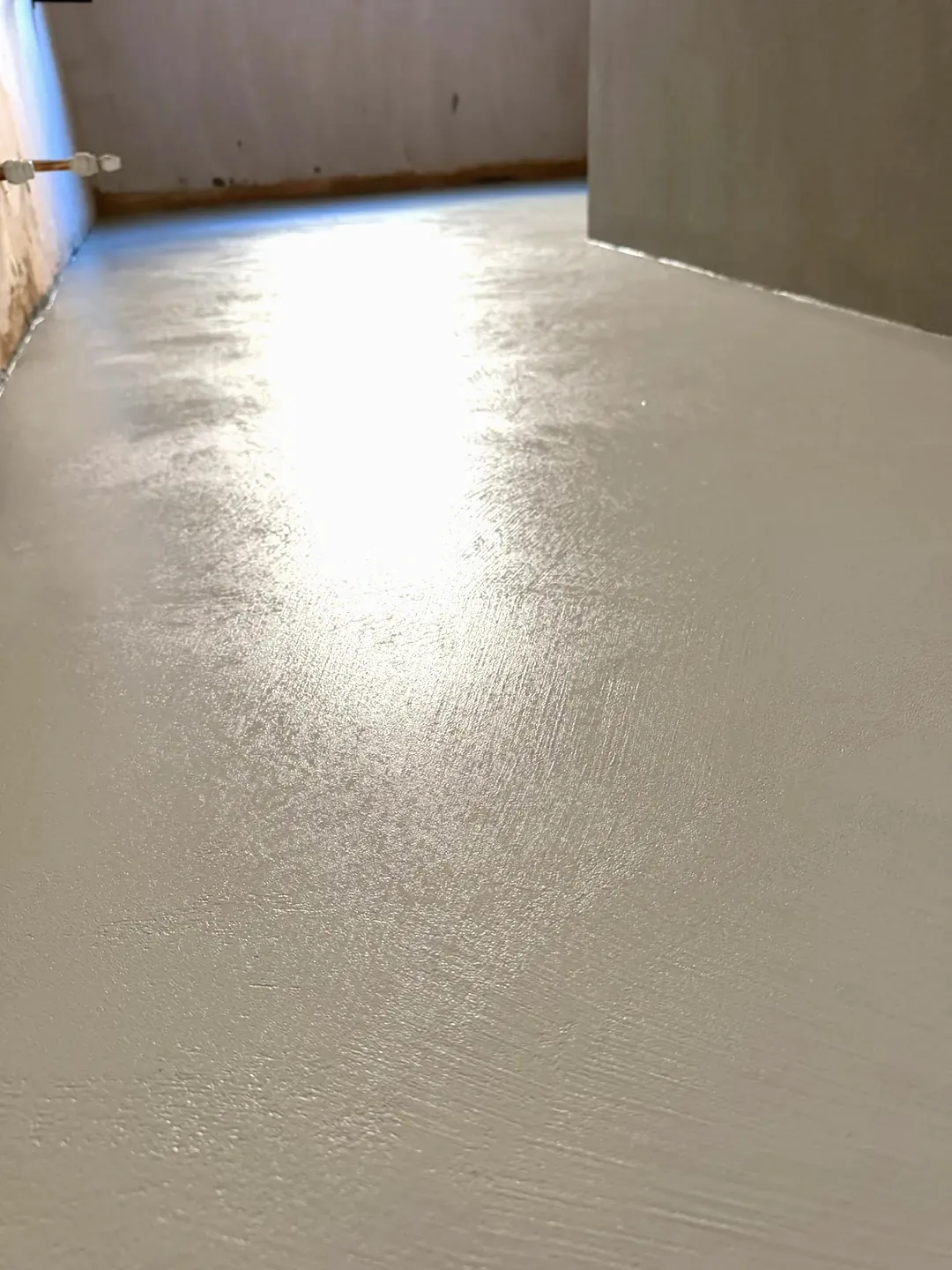
Acid stain is a chemical reaction, not a paint. The stain reacts with the minerals already present in concrete and cement-based surfaces, and that reaction produces colour from inside the material rather than a layer sitting on top of it. The result is translucent, variegated, with clouding, veining and tonal shifts that move across a floor the way natural stone does. Nobody chooses acid stain for a flat, uniform colour; they choose it because a floor treated this way looks like nothing else in the room can be specified to look.
Because the colour comes from a reaction rather than a pigment applied evenly, the outcome depends on what is already in the substrate: its age, its curing history, its mineral content, trowel marks, patching, even old adhesive residue can all show through as part of the pattern. Two floors given the same stain in the same colour will read differently, sometimes markedly so. That is the character of the system, not a flaw in the work.
We are certified with IDEAL WORK UK to apply this system, and we treat the unpredictability honestly rather than promising a look we cannot guarantee before we have seen how your specific floor reacts. We sample on site, on your substrate, before agreeing a final colour and coverage, because a sample from a different slab tells you very little about how yours will behave.
Acid stain suits concrete floors and other cement-based surfaces in homes, retail units, showrooms and hospitality interiors, wherever a client wants a floor with genuine depth and movement rather than a flat block colour. Once stained, the floor is sealed to protect the finish and make it practical for daily use.